Rooftop AC — Chimney Cable Routing
In Warsaw's historic tenement buildings and properties with protected facades, installing air conditioning presents a unique challenge. Heritage conservation officers often prohibit placing outdoor units on the facade, and housing associations have strict rules about altering the building's appearance. The solution is rooftop installation with piping routed through a disused chimney.
Routing AC piping through a chimney requires prior verification of the chimney's structural condition. The chimney must be disused — it cannot serve a ventilation or flue function. Before starting work, we commission a chimney inspection to confirm that the flue is safe to use as an installation route. Obtaining consent from the housing association and, where applicable, the heritage conservation officer is a mandatory step.
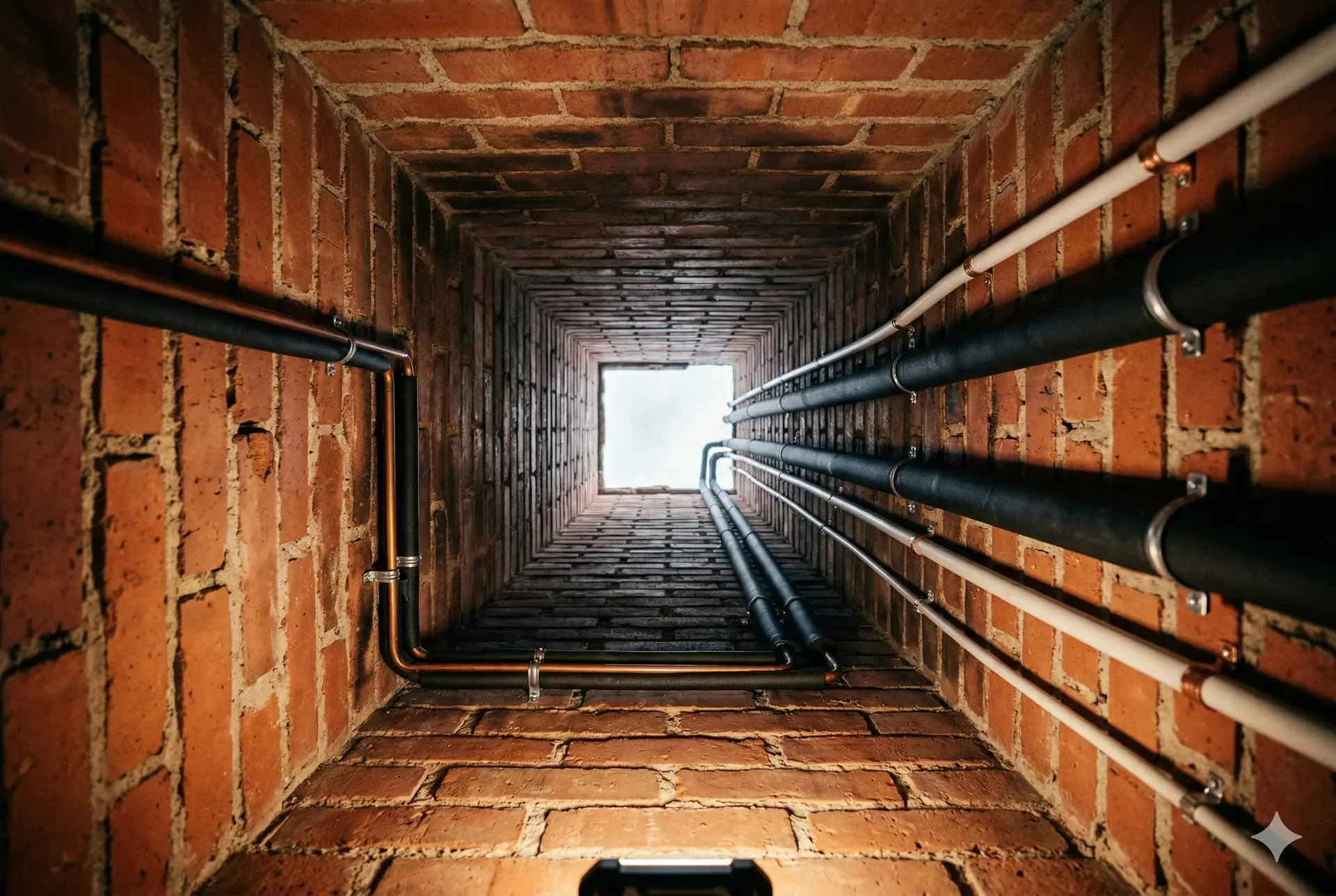
Fire safety is a priority in these installations. Refrigerant pipes and electrical cables running through the chimney must be protected with fire-rated transit sleeves. We also install fire barriers at the entry and exit points of the chimney, in accordance with building regulations. All insulation materials used inside the chimney must have appropriate fire resistance ratings.
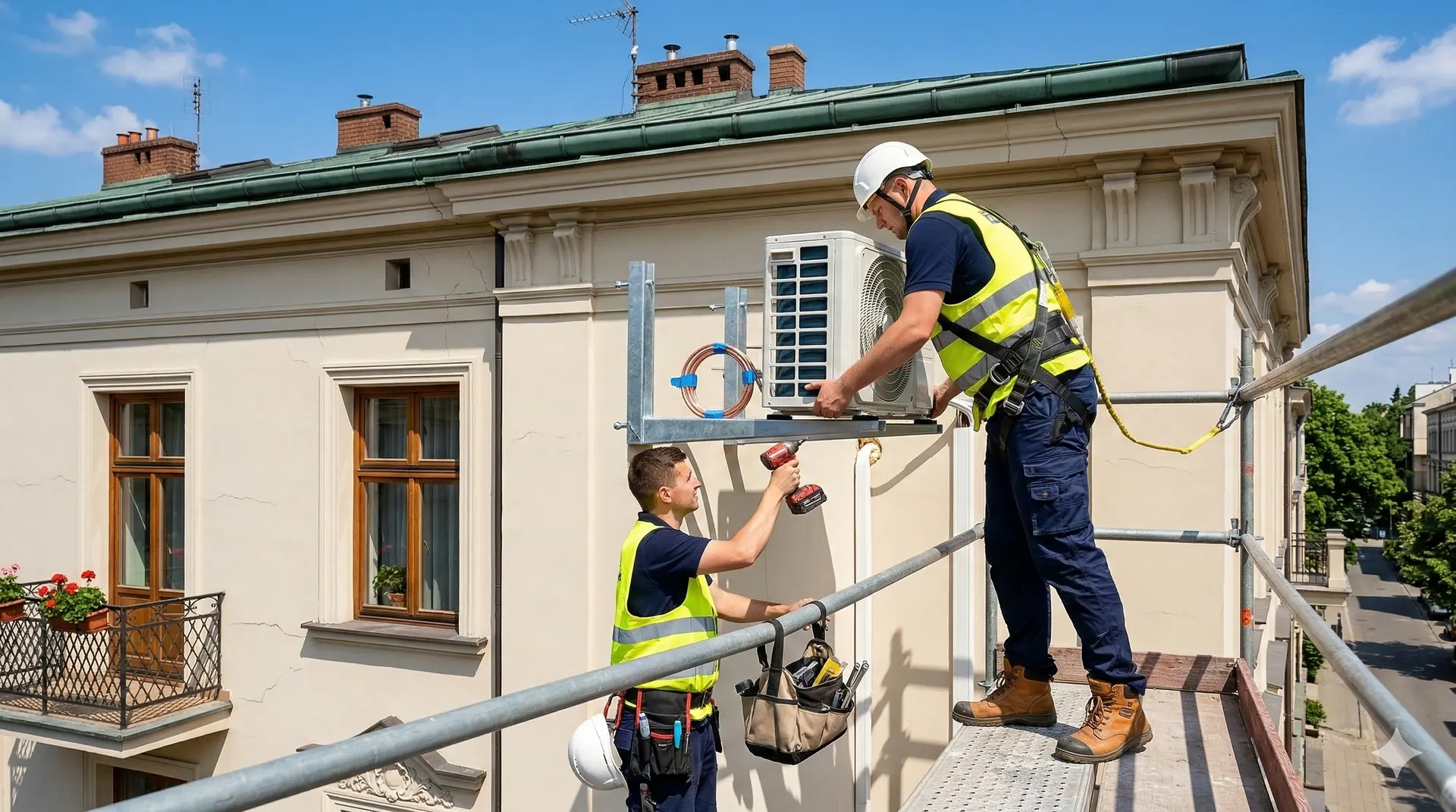
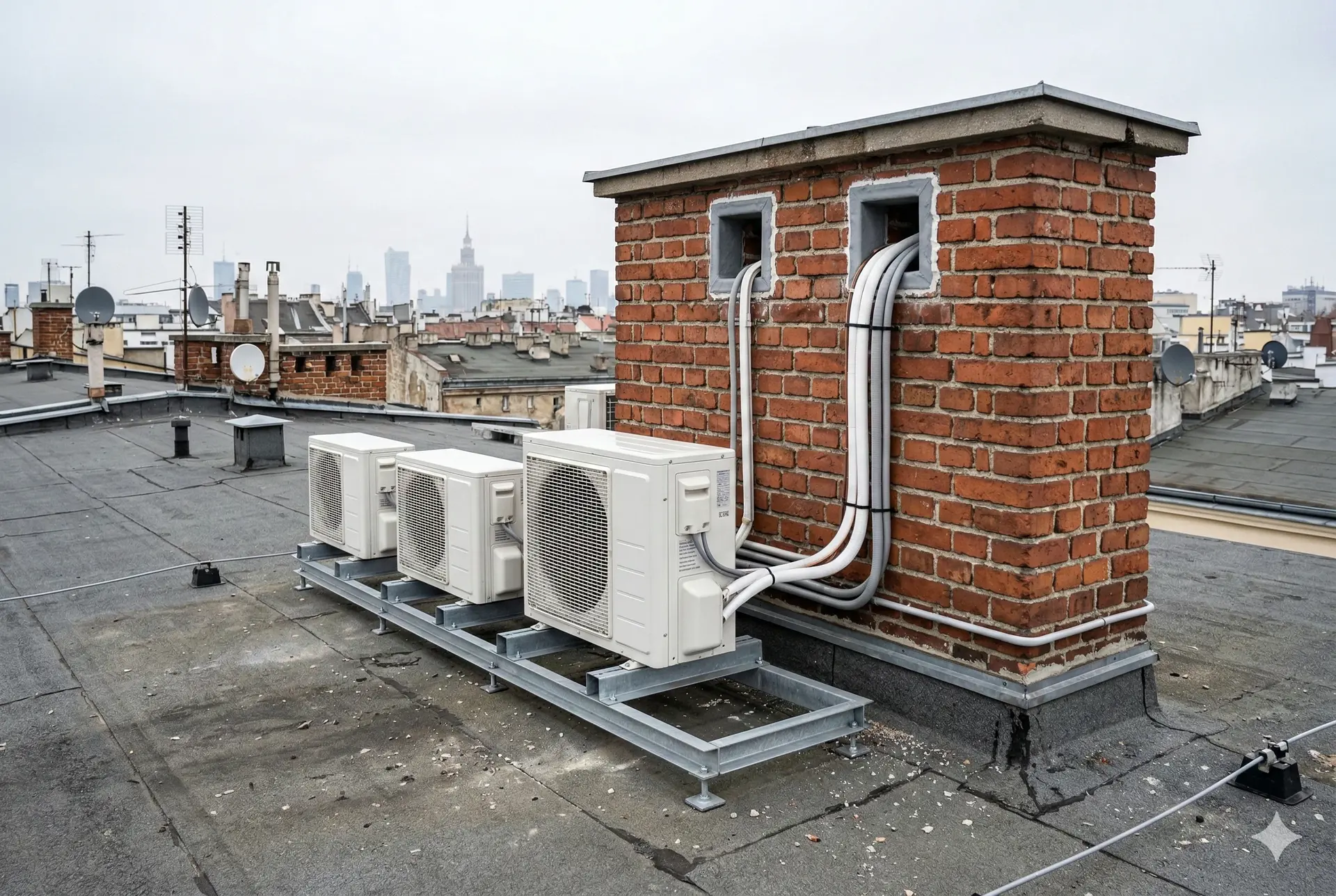
Technically, the installation involves feeding copper refrigerant pipes, electrical cables and control wiring into the chimney from the apartment level, then routing them out through the chimney cap onto the roof. On the roof, we mount the outdoor unit on special roof brackets that do not damage the roof covering. Pipes and cables are secured inside the chimney with metal brackets every 1-1.5 metres.
Permits and paperwork are an important part of this process. For buildings listed on the heritage register, conservation officer approval is required. For multi-dwelling buildings, consent from the housing association or cooperative is needed. We prepare complete technical documentation for our clients to facilitate obtaining the necessary permits.
Hidden routing through the chimney has significant aesthetic advantages — no pipes or cables are visible on the facade, and the only visible element is the outdoor unit on the roof, which is practically invisible from street level. For apartment owners in historic tenement buildings, this is often the only permissible solution.
Rooftop AC with cable routing through a chimney is one of several non-standard approaches to air conditioning in older buildings. Our guide on AC in a Warsaw tenement covers the broader heritage-approval and courtyard-acoustics challenges in depth. For apartments that need to cool several rooms from a single outdoor unit, a multi-split system is often the better fit, and a separate guide compares ducted and wall-mounted AC types. All of these variants share the same compressor and R32 refrigerant technology — they differ in pipe routing and the approvals required.
At LeoKlima, we have experience carrying out these non-standard installations in Warsaw's historic buildings. Every project requires an individual approach and thorough analysis of the technical conditions. If you live in a building where standard AC installation is not possible, contact us — we will find a solution. Call: 502 010 010 or write through the form on /kontakt.