Multi-split AC for a Warsaw apartment 2026
What multi-split is and who it suits
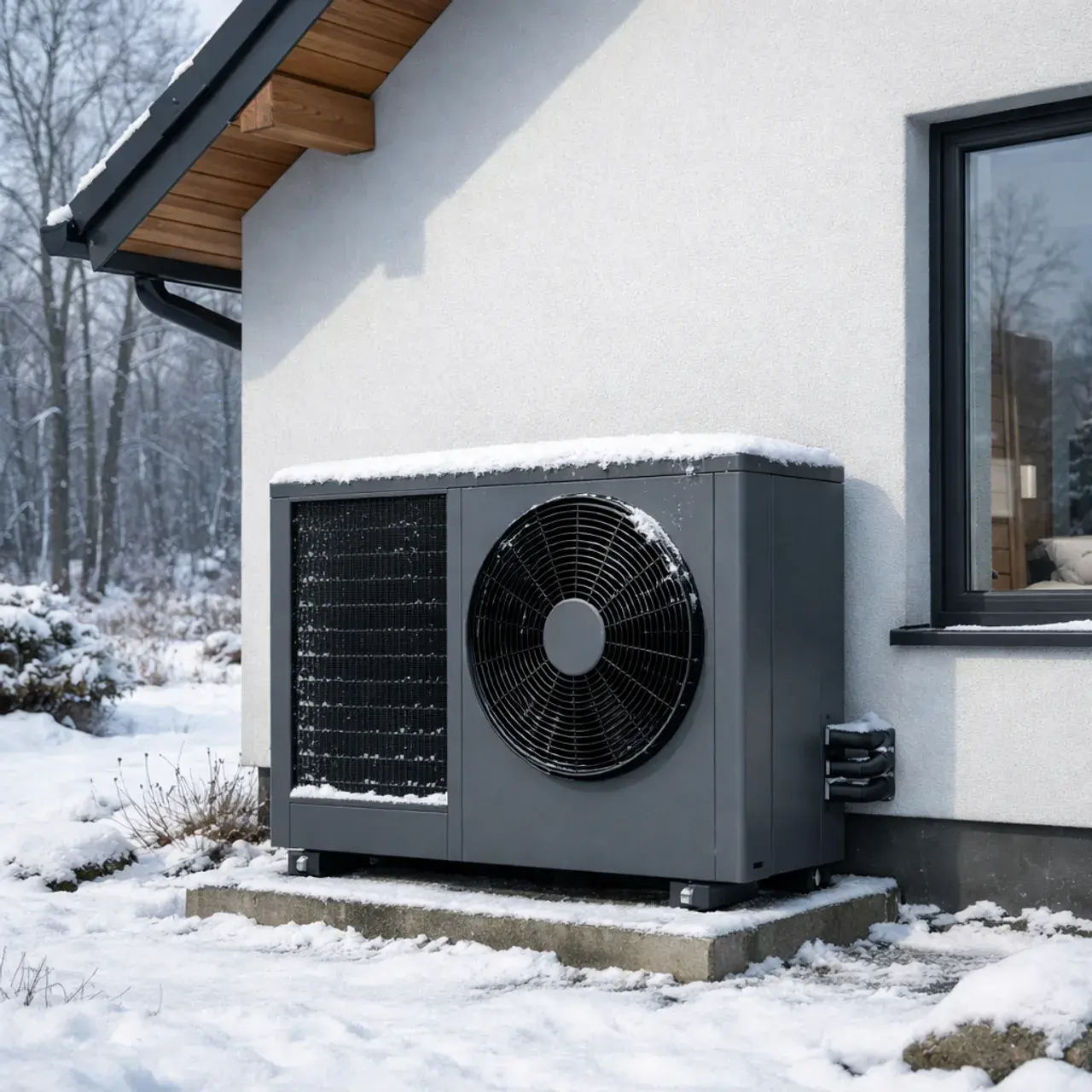
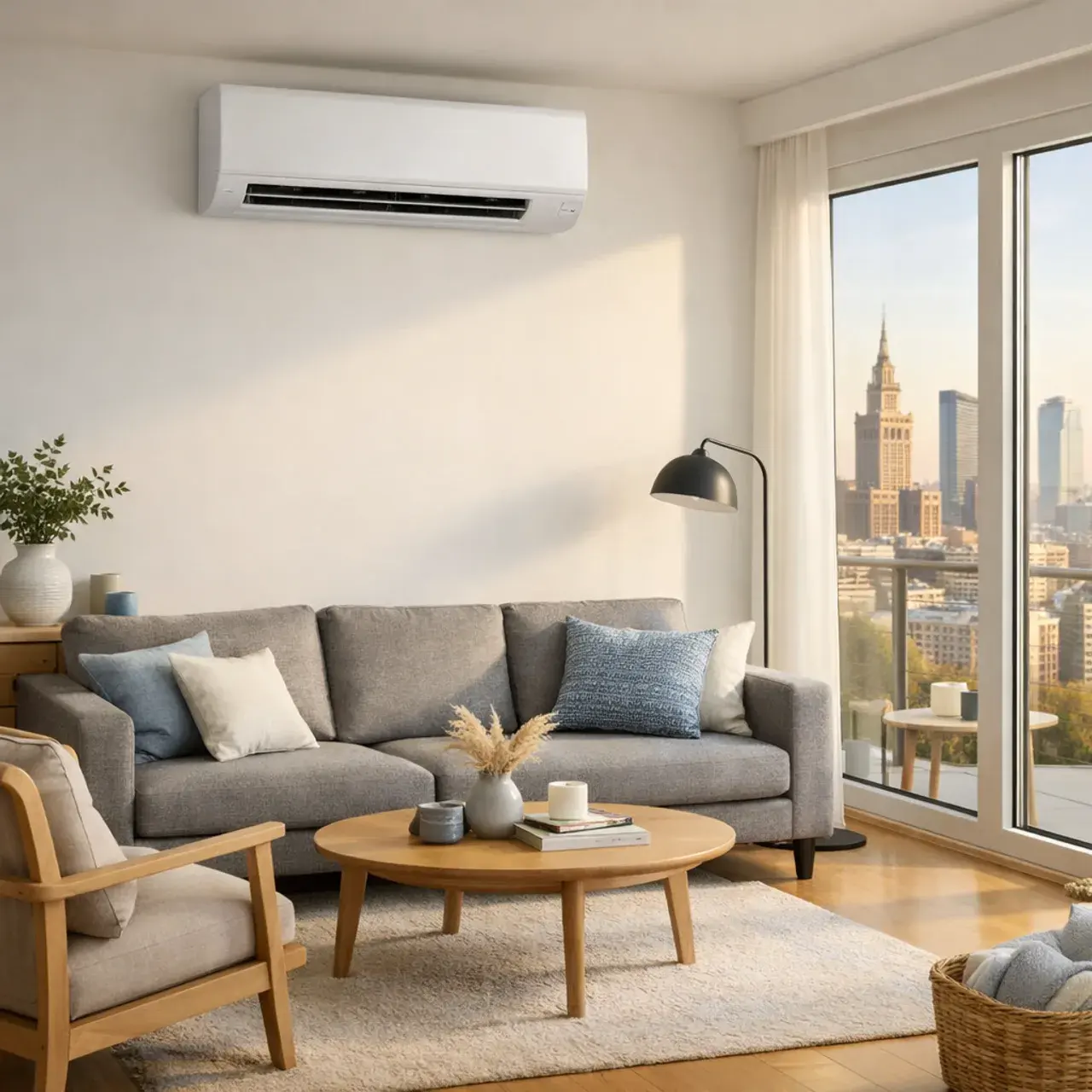
A multi-split system is an air-conditioning setup in which at least two, and usually two to five, indoor units are connected to one outdoor unit. In practice, this means you can cool several rooms in an apartment without having to install a separate outdoor unit on the façade or balcony for each room. This is the basic difference compared with a classic split system, where one indoor unit works with one outdoor unit. For an apartment owner in Warsaw, the difference is not only technical but very practical. In new developments in Mokotów, Wola, and Wilanów, developers and housing communities increasingly limit the number of devices on the façade, while in older buildings in Ochota, Żoliborz, or Praga-Południe, the problem is often a small balcony or no approval for three separate outdoor units. In such conditions, multi-split makes particularly good sense when we want to air-condition the living room and one or two bedrooms while keeping the visual layout tidy and limiting interference with the building’s common areas. On the Polish market, multi-split systems have been available for years, but they have only clearly grown in popularity over the last few seasons, mainly because of the growing number of hot days and the fact that air conditioning is no longer treated as a luxury. More and more Warsaw residents are asking not whether to install air conditioning, but how to do it sensibly in a 2-, 3- or 4-room layout. In the offerings of brands such as Daikin, Mitsubishi Electric, Haier, Samsung, and LG, you can now find complete multi-split sets for apartments from 45 to 100 m². A typical 2 x 2.5 kW or 3 x 2.5 kW configuration allows you to comfortably cool a block apartment and often also provides heating during transitional periods. However, multi-split is not a universal solution for every unit. It works best where we really need several independent cooling zones and where technical or aesthetic conditions favor one outdoor unit instead of two or three.
The most common question from investors is: is it better to choose one multi-split system or install two or three independent splits? The answer is not black and white, because five areas need to be compared: purchase cost, installation cost, aesthetics, later servicing, and failure risk. Let's start with money. Two independent budget split sets, for example Haier Flexis or Samsung Cebu at 2.5 kW, installed in Warsaw, usually cost about PLN 9,000–12,000 in total. Three such sets often cost PLN 13,500–18,000. By comparison, a multi-split system with one outdoor unit and two indoor units most often costs PLN 11,000–15,000, while a configuration for three rooms usually costs PLN 15,000–22,000, depending on the brand, pipe lengths, and equipment class. So it is clear that multi-split is rarely the cheapest option upfront. Its advantage appears elsewhere. First, one outdoor unit means a much better-looking façade and less occupied space on the balcony. In a multi-family building, this is a very strong argument, because three outdoor units side by side can not only look unsightly, but also generate more noise and make it harder to obtain management approval. Second, servicing one outdoor unit is organizationally simpler, although the refrigeration circuit in a multi-split system is more complex than in a single split. The cost of servicing two splits in Warsaw is usually PLN 500–800 per year, three splits PLN 750–1,200, and a multi-split with three indoor units most often PLN 700–1,100. So the differences are not huge. As for energy consumption, independent splits often have slightly better SEER values than multi-split systems, so with identical usage they may be marginally more economical. On the other hand, if in practice only two of three zones are running, a modern multi-split can modulate its output very efficiently. In terms of reliability, it has to be said plainly: a fault in one split only takes one room out of service, whereas a failure of the multi-split outdoor unit disables the entire system. This is an important argument for people who value redundancy. That is why the choice should not be based on a single parameter, but on the realities of the apartment and the requirements of the housing community.
Power sizing and indoor unit placement
Selecting the cooling capacity in a multi-split system requires greater precision than with a single air conditioner, because you cannot simply add up the capacities of all indoor units and choose an outdoor unit with the same output. In an apartment, it is almost never the case that all rooms will operate at 100% demand for a long time at the same time. That is why manufacturers use a simultaneity factor, meaning they assume that peak loads in individual rooms will not overlap perfectly. In practice, this means that the sum of the nominal capacities of the indoor units may be higher than the nominal capacity of the outdoor unit. For example: three 2.5 kW units give a total of 7.5 kW, but they often work with a 5.2–6.8 kW outdoor unit, depending on the brand and capacity tables. How do you calculate demand? In Warsaw apartments, a rough estimate of 80–120 W per m² is usually used, but window orientation, top-floor location, glazing area, and the number of occupants must be taken into account. A 2-room, 42 m² apartment with a 22 m² living room and a 12 m² bedroom in a well-insulated building in Ursynów may need about 2.5 kW for the living room and 2.0–2.5 kW for the bedroom. The sum of the indoor units would then be 4.5–5.0 kW, while the outdoor unit often has 4.1–5.0 kW. In a 3-room apartment of 58–65 m², for example a 24 m² living room plus two bedrooms of 10–12 m² in Wola, a typical setup is 3.5 kW in the living room and 2 x 2.0 or 2 x 2.5 kW in the rooms, giving a total indoor capacity of 7.5–8.5 kW. The outdoor unit is then often selected at 5.2–6.8 kW. For a 4-room apartment of about 78–85 m², with a 28 m² living room, two bedrooms, and a study, a sensible configuration might be 3.5 kW + 2.5 kW + 2.5 kW + 2.0 kW, i.e. 10.5 kW on the indoor side, with a 7.1–8.0 kW outdoor unit. In BTU, this corresponds roughly to 12,000 + 9,000 + 9,000 + 7,000 BTU. The key, however, is not just adding figures, but checking the manufacturer’s performance tables for the specific combination and operating conditions.
| Room | Area | Cooling capacity | BTU/h | Note |
|---|---|---|---|---|
| Home office / small bedroom | 10–12 m² | 2.0 kW | 7,000 | Avoid airflow onto desk / bed |
| Standard bedroom | 12–15 m² | 2.0–2.5 kW | 7,000–9,000 | Night mode is mandatory |
| Master bedroom | 16–20 m² | 2.5–3.5 kW | 9,000–12,000 | Mount alongside the bed, not over it |
| Open-plan kitchen | 12–15 m² | 2.5 kW | 9,000 | Not above the stove |
| Living room (window wall) | 22–28 m² | 3.5 kW | 12,000 | Aim along the room's long axis |
| Large living room with mezzanine | 35–45 m² | 5.0–6.8 kW | 18,000–24,000 | Consider ducted or 2 units |
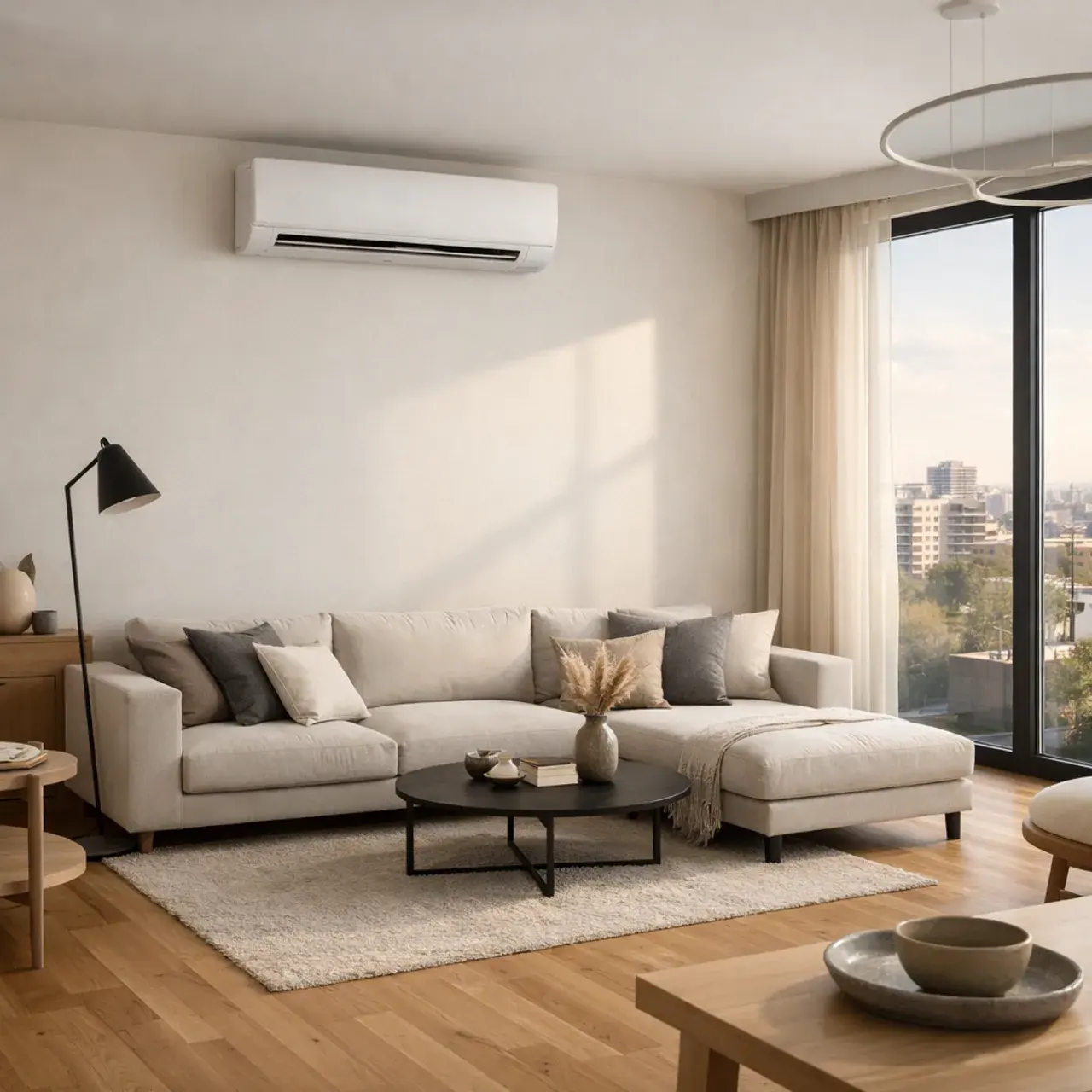
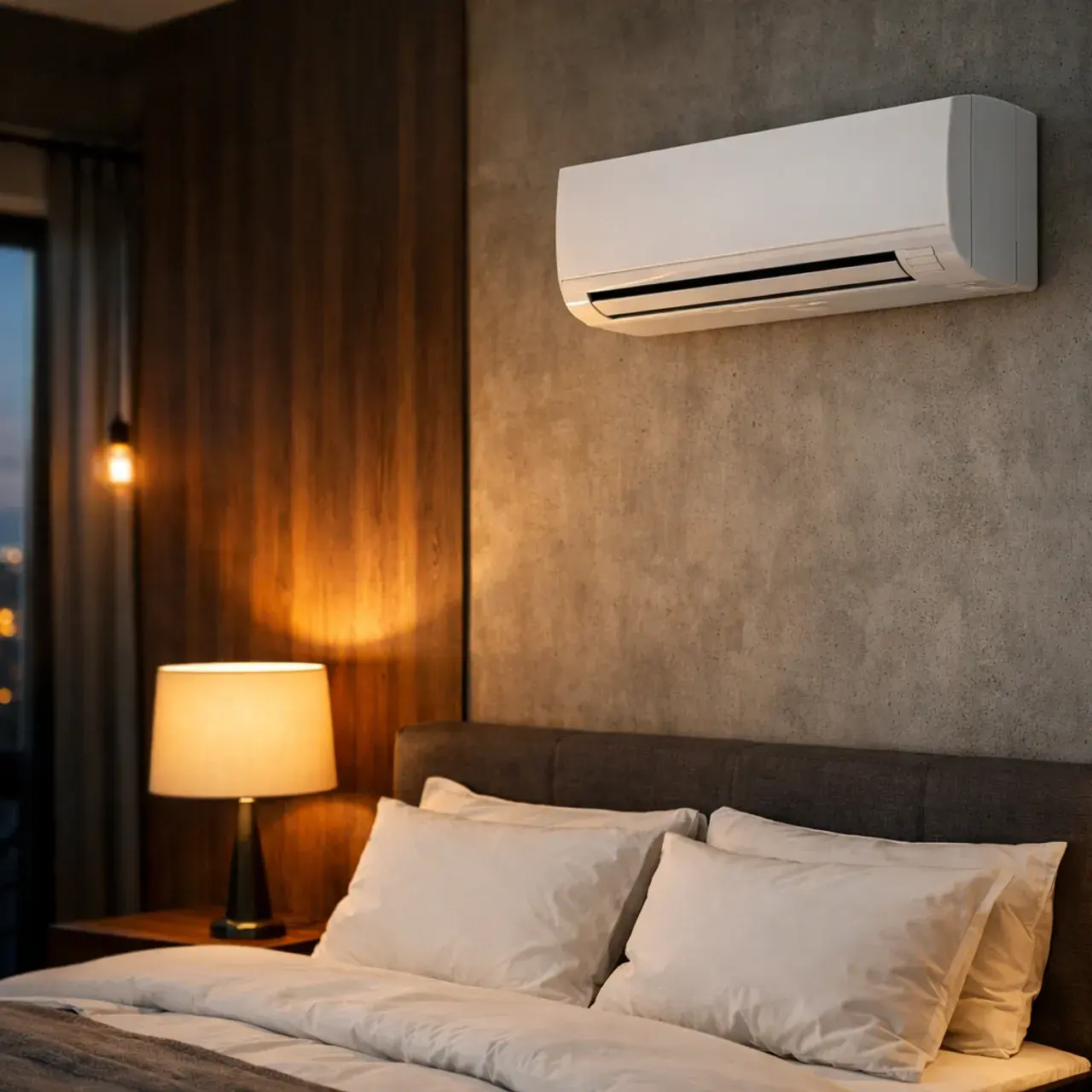
The placement of indoor units in an apartment directly affects not only thermal comfort, but also whether the air conditioning is perceived as a pleasant background element or as a device that constantly gets in the way of household members. In the living room, the best place for a wall-mounted unit is usually an exterior wall or a wall that allows the air stream to be directed along the room’s longest dimension. This gives the cool air space to mix evenly instead of blowing directly onto the sofa or dining table. The standard mounting height for a wall unit is about 2.1–2.3 m from the floor, while maintaining the clearance from the ceiling specified by the manufacturer, usually 10–15 cm. In a bedroom, the most important rule is: do not direct the airflow straight at the bed. Even if the unit has a gentle-flow function and automatic louvers, hours of airflow onto a sleeping person increase the risk of discomfort, drying of the mucous membranes, and morning headaches. A better solution is to mount it above the door, on a side wall, or in such a way that the air stream avoids the sleeping area. Similarly, in a study, it is not a good idea to place the air conditioner opposite the desk, because cool air blowing directly onto the neck for eight hours of remote work quickly becomes bothersome. The kitchen is more complicated. If the kitchen is open to the living room, one unit in the living room is usually enough, provided its location allows it to cover the kitchen area as well. In a closed kitchen, a separate unit makes sense mainly when the room gets very warm, has large windows, and is actually used for long periods. However, installation above a hob, oven, or place where intensive steam is generated should be avoided. In larger apartments on Warsaw’s premium market, concealed ducted units hidden in a suspended ceiling are also appearing. This solution gives an excellent aesthetic effect, because only the supply grilles are visible, but it requires planning enough technical space, a careful duct design, and a bigger budget. For an apartment after a full renovation, this can be a very elegant option, whereas in a typical block apartment, classic wall-mounted units more often win because of their simplicity and lower cost.
In a multi-split system, the way refrigerant lines and control cables are routed through the apartment is very important, because the installation itself determines the aesthetics, the scope of construction work, and the final installation cost. For each indoor unit, a pair of refrigerant pipes, a control/power cable, and condensate drainage must be brought in. With two or three rooms, this turns into quite an extensive network that has to be hidden intelligently. The most aesthetic solution is routing the installation in a suspended ceiling. This makes it possible to conceal the lines with practically no visible elements on the walls and also allows the condensate drainage slope to be planned precisely. This is a very popular option during full apartment renovations in Warsaw, especially in apartments and units after developer handover. However, it comes at a price. The installation itself becomes more labor-intensive, and the investor must additionally build gypsum-board structures, service access panels, and often coordinate the air-conditioning work with the electrician and the interior finishing crew. The second option is wall chases, meaning milling or chiseling grooves for pipes and cables. This solution can be cheaper than building elaborate suspended ceilings, but it requires adequate plaster thickness and caution so as not to damage the structure or existing installations. In large-panel blocks, the scope of chasing is often limited, so each route has to be planned individually. The third variant is surface trunking, i.e. channels run along the wall or under the ceiling. This is the simplest and fastest method, often used when installing without major renovation, but for obvious reasons it is the least discreet visually. In practice, white 60–90 mm trunking can be aesthetically integrated into some interiors, especially if it runs in line with built-in furniture, but in a modern premium living room it is rarely the first choice. It is also worth remembering to coordinate with the renovation schedule. The best time for air conditioning is before skim coats, painting, and kitchen installation. Then the line routes can be optimized, the number of condensate pumps reduced, and later modifications avoided. In a finished apartment, installation is still possible, but it is usually more expensive, more invasive, and involves aesthetic compromises.
Outdoor unit, noise and formalities
The outdoor unit in a Warsaw block of flats is a topic that very often determines whether the investment will be straightforward or turn into several weeks of discussions with the building management. In theory, there are three possibilities: the balcony, the façade, and the roof, but in practice not every option is available in every building. Balcony installation is most often chosen because it limits interference with common areas and usually makes servicing easier. However, it is important to remember that the outdoor unit cannot be squeezed into a corner without maintaining service space and free airflow. If the balcony is 1.2 m deep and already contains glazing, a drying rack, and furniture, the outdoor unit may simply get in the way of everyday use. The second option is the façade, most often facing the courtyard or a less representative part of the building. Here, approval from the housing community or cooperative becomes key. In many Warsaw developer-built estates, the rules are already set out in the regulations and specify the exact mounting locations, condensate drainage method, and permissible installation routes. In older buildings, management often requires a project, façade photos, a technical description, and a declaration that the appropriate noise level will be maintained. The third option, the roof, is used less often in apartments because it requires longer refrigerant lines, service access agreements, and usually a larger budget. Special caution must be taken in Śródmieście and Praga, especially where the building or entire urban layout is under heritage protection. In such locations, mounting on the front façade may be impossible or require additional approval from the city heritage conservator. Noise is a separate issue. Modern outdoor units from Daikin, Mitsubishi Electric, or LG can operate at around 46–52 dB depending on the mode, but a poorly mounted unit can transmit vibrations to the wall or balcony slab. That is why anti-vibration pads, proper bracket spacing, and a carefully planned position relative to neighbors’ windows are used. In practice, the best installation is the one you cannot hear at night and do not have to explain later at a housing community meeting.
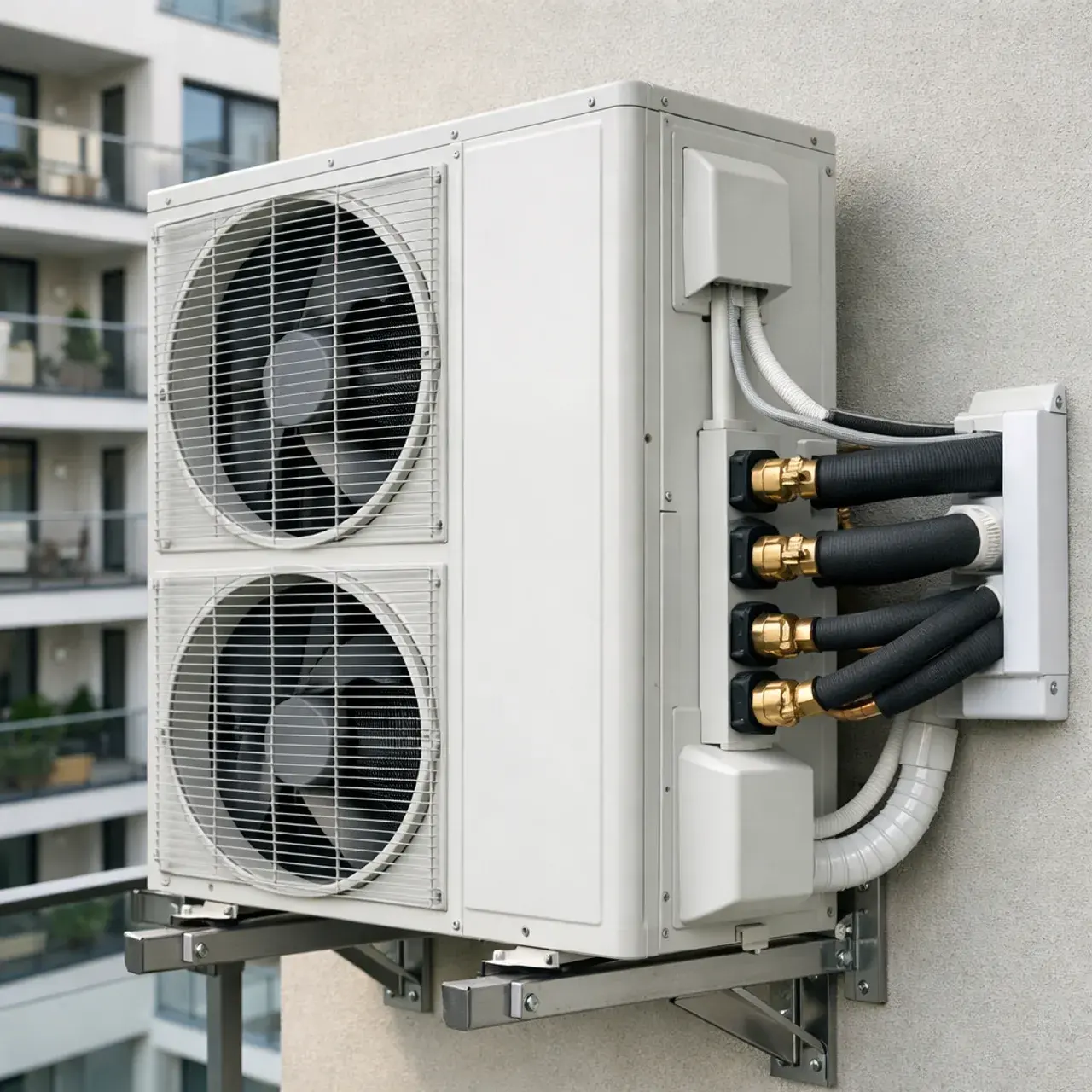
A multi-split system has technical limitations, and these are usually what determine whether an attractive concept on paper can be safely and properly implemented in a specific apartment. The first area is the maximum length of the refrigerant lines. Each manufacturer gives its own limits for the entire system and for each individual branch. For example, in popular apartment systems from Haier or LG, the total installation length can be roughly 40 to 70 m, and the length of a single branch is often 15–25 m. In Daikin and Mitsubishi Electric, depending on the 2-, 3- or 4-port outdoor unit model, the parameters also vary and need to be checked in the technical documentation rather than estimated by eye. The second important limitation is lift, i.e. the height difference between the outdoor and indoor units and between the indoor units themselves. In a single-level apartment this is usually not a major problem, but when the outdoor unit ends up on the roof or at the bottom by a loggia, and part of the system runs high in the ceiling, the limits can be reached quickly. Typical permissible lift values in apartment solutions are several to a dozen or so meters, but again everything depends on the specific product series. Another issue is the refrigerant distribution method. In many apartment systems, the outdoor unit has ready-made connections for 2, 3, or 4 ports, so no additional branch boxes are used. However, in more extensive systems or selected VRF and mini-VRF series, branch kits or Y-splitters appear, which must be selected and installed correctly according to the manufacturer’s guidelines. Incorrect placement or an improper pipe diameter can lead to unstable operation, uneven refrigerant distribution, and capacity problems. Refrigerant charge compensation also has to be taken into account. The factory fills the outdoor unit for a specified line length, for example 20, 30, or 40 m. If the installation is longer, the installer must add the appropriate amount of refrigerant, usually calculated in grams per additional meter of pipe of a given diameter. This is not a detail, but a condition for proper compressor operation. That is why in multi-split systems, the design and the experience of the installation team are crucial, because installation mistakes often only become apparent during the hottest days.
Noise in a multi-split system is a subject that has to be taken seriously already at the design stage, because a poorly chosen outdoor unit location can turn a good investment into a source of conflict with neighbors. Inside the apartment, modern wall units in night mode usually reach 19 to 25 dB(A), which in practice corresponds to a very quiet library or background noise. The quietest Mitsubishi Electric, Daikin Emura, Samsung Wind-Free, or selected LG and Haier units can drop even to around 19 dB(A), but it should be remembered that these values refer to the lowest fan speed and stable operating conditions. In real use, when the room has warmed up after a hot day, the air conditioner will run louder for a while, usually in the range of 28–38 dB(A). That is still acceptable, provided the unit has not been placed directly above the bed or opposite the sofa at a distance of 1.5 meters from the user’s head. The noise of the outdoor unit is a much more sensitive issue, because it affects not only the apartment owner, but the entire stack of balconies, loggias, and neighbors behind the wall. Typical multi-split outdoor units have acoustic power that translates into a sound pressure level of around 45–52 dB(A), depending on load and measurement distance. In Warsaw, housing communities and cooperatives increasingly require catalog sheets with noise parameters, and for more demanding investments also a description of the anti-vibration mounting method. At night, especially between 22:00 and 6:00, although the notion of “quiet hours” comes more from house rules than from one specific law, residents are especially sensitive to humming and resonance. For residential areas, permissible noise levels at the boundary of the protected area are limited by environmental regulations, so the mere fact that a device is “quiet according to the manufacturer” is not enough. Practical noise reduction includes anti-vibration pads, brackets with rubber inserts, avoiding installation in corners that amplify reflected sound, proper pipe routing without transferring vibrations to the wall, and selecting the night mode of the outdoor unit. In many cases, simply moving the outdoor unit by 50–80 cm, using better vibration isolators for PLN 150–400, and limiting the maximum operating frequency at night already gives a noticeable improvement without reducing cooling comfort.
Energy classes and the SEER indicator in multi-split systems should be analyzed carefully, because many investors compare label data without taking into account how differently single-room and multi-room systems operate. SEER, or seasonal energy efficiency ratio, shows how much cooling the device provides relative to the energy consumed in a typical season. The higher the SEER, the better, but in a multi-split system the result is usually slightly lower than in a very good single split in the same price class. That is natural, because one outdoor unit serves several zones, the control system is more complex, and the device has to operate flexibly under different load combinations. Good premium wall-mounted splits can achieve SEER values above 8.5, even around 9.0, while decent multi-split systems more often fall roughly within the 6.1–8.0 range depending on the combination of outdoor and indoor units. This does not mean that multi-split is “uneconomical,” only that its benchmark is different. How should labels be read? You should check not only the energy class, such as A++ or A+++, but also the exact SEER value, cooling capacity, and annual energy consumption given in kWh. It is also worth remembering that the annual consumption on the label is a model value based on a standardized usage profile, not an exact forecast for a specific apartment in Warsaw. In real conditions, the summer season usually lasts from June to the end of August, with periods of intensive operation during heat waves. If a 60 m² apartment has a multi-split system with three units, but mainly two zones are used regularly for 6–8 hours a day, the real seasonal energy consumption may be roughly 250–450 kWh. With more intensive use, a corner apartment with large glazing, or remote work throughout the summer, the figure may rise to 500–800 kWh. At an electricity price of around PLN 1.00–1.30 per kWh, this gives a cost of roughly PLN 250 to 1,000 per season, depending on the tariff and usage style. That is why when choosing a unit, it is worth looking not only at the catalog class, but also at operating culture, modulation range, and whether the system will be used daily in several rooms or only occasionally in the living room and one bedroom.
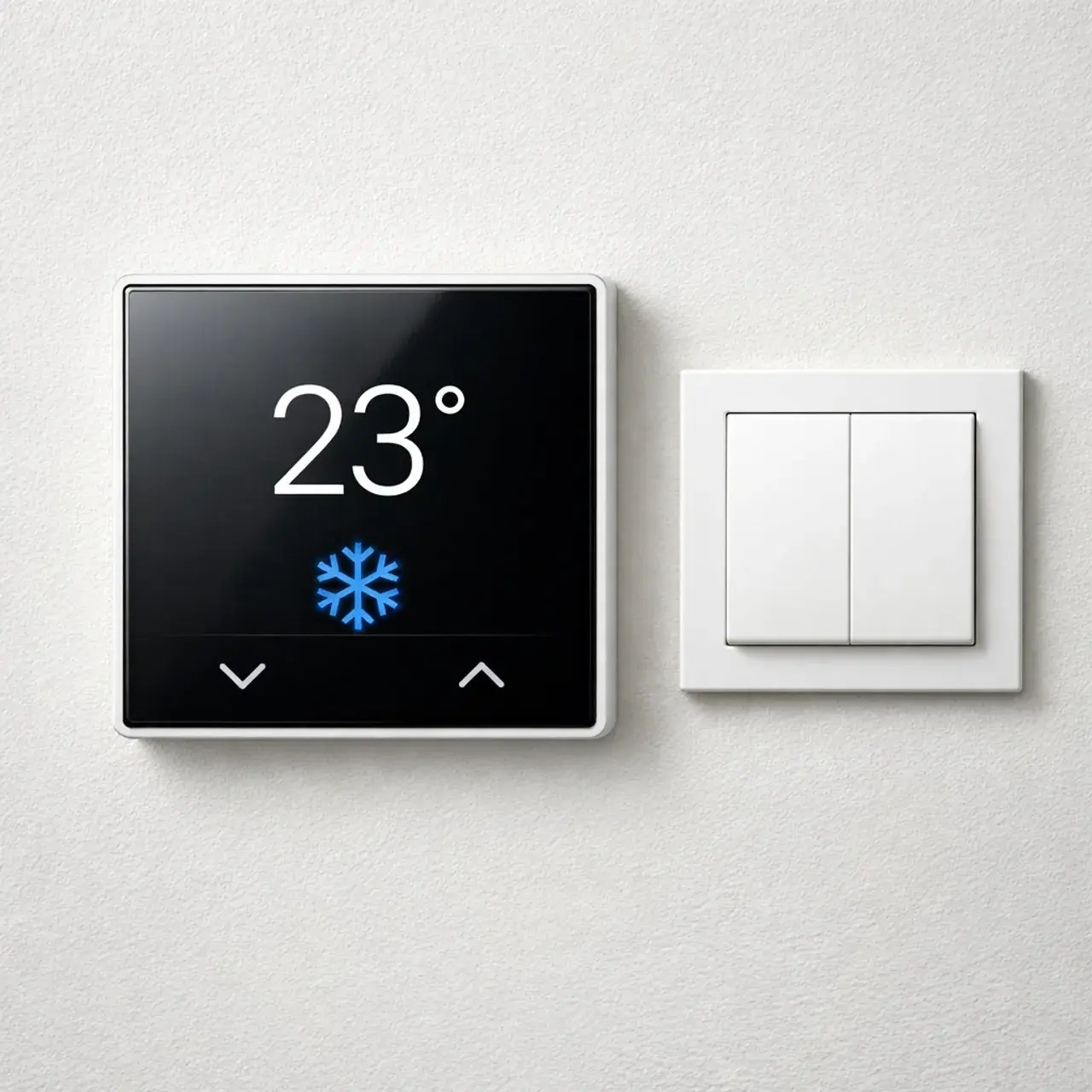
Control of a multi-split system in an apartment is no longer limited to a simple infrared remote, although that is still the most commonly chosen method of operation by users who value simplicity and quick response. In practice, the wireless remote works best where we want to set the temperature in each room independently, switch from cooling to dehumidification, or activate a night mode without reaching for the phone. In modern Daikin, Mitsubishi Electric, Haier, Samsung, and LG systems, wall panels and Wi-Fi control are also becoming standard, and the differences between brands now concern less the mere presence of an app and more the quality of integration and stability of operation. Daikin Onecta offers very convenient weekly schedules, Mitsubishi’s MELCloud provides extensive control over operating parameters and error history, and Haier hOn is appreciated for its clear interface and simple setup for less technical users. More and more clients in Warsaw are also asking about integration with Apple Home, Google Home, or the Matter protocol, because they want the air conditioning to function as part of the entire smart apartment rather than as a separate system. In practice, a well-configured multi-split can respond to the presence of occupants thanks to geofencing, lower the temperature in the living room 30 minutes before returning from work, reduce cooling after leaving the apartment, and automatically switch to economy mode at night. Automation scenarios make particular sense in 60–100 m² apartments, where 3 or 4 units are operating and even a slight schedule optimization translates into bills. For example, setting separate schedules for the bedroom, children’s room, and living room can reduce actual energy consumption by 10–20% compared with running it “fixed” all day. However, it is worth remembering that not every multi-split system supports full smart home integration right after installation. Sometimes an additional Wi-Fi module for PLN 300–800 per unit is needed, and sometimes a central controller for PLN 1,500–4,000 if you want to manage all rooms from one panel. In premium apartments, wall-mounted central controllers are also found, allowing extreme temperatures to be blocked, limits to be set, and the whole system to be managed easily, which is useful, for example, in rental apartments. Well-designed control is not a gadget, but a real influence on comfort, bills, and device lifespan.
Using a multi-split in heating mode in winter is one of the most frequently asked-about issues among apartment owners in Warsaw, especially with rising energy costs and the popularity of transitional heating in autumn and spring. In theory, a modern inverter system can not only cool but also heat an apartment very efficiently, and at outdoor temperatures from +7 to 0°C the COP often ranges from 3.5 to 5.0. This means that from 1 kWh of electricity we get 3.5–5 kWh of heat, which is a huge difference compared with a simple electric heater. The problem starts with stronger frost, especially in typical multi-split sets, where one outdoor unit must simultaneously serve several rooms. When it is -15°C or -20°C outside and all indoor units are running at high demand at the same time, actual heating output drops and you have to take into account outdoor-unit defrosting, periodic interruptions in heat delivery, and power limitations. In practice, many systems heat the apartment well during transitional periods and mild winter, but not every multi-split should be treated as the sole heat source for the entire season. Extra caution is needed for corner apartments, those with large glazing, poorer insulation, or high ceilings, where heat losses are higher than average. For example, a 75 m² apartment in an older building may need 5–7 kW of stable heating capacity in winter, and if the system has three 2.5 kW units, the sum of their nominal capacities does not automatically mean you will get the same amount at extreme frost. Daikin, Mitsubishi, and Toshiba offer models that maintain reasonable performance down to -15°C, and some even to -20°C, but you should always read the heating capacity table for low temperatures, not just the marketing slogan “heats down to -20°C.” Multi-split is not the best choice for heating when the building has properly functioning district heating and the air conditioning is intended mainly for cooling and occasional top-up heat. It is also not ideal where the user expects very stable thermal comfort with continuous operation of all rooms in winter. In such cases, it is better treated as a support to the central heating system rather than a full replacement. Multi-split heating makes the most sense in apartments with insufficient heating outside the season, in short-term rental apartments, and where we want to raise the temperature quickly without turning on the building-wide system.
Brands, costs and purchasing procedure
A comparison of brands in the multi-split segment should start with the fact that there is no single “best” manufacturer for every apartment, because a family with three bedrooms in Wilanów has different priorities than the owner of a 55 m² apartment in a tenement building in Mokotów. Haier is currently a choice often considered by clients looking for a reasonable price and good equipment already in the standard package. The brand’s 2x, 3x, and 4x sets are attractive cost-wise, and Wi-Fi functions, decent apps, and respectable operating culture make them a strong player in the mid-budget segment. Roughly speaking, a Haier multi-split set with two units usually costs PLN 12,000–16,000 with installation, with three units PLN 17,000–23,000, and with four units PLN 23,000–31,000, depending on installation length. Mitsubishi Electric with the MXZ series is a segment for people who value reliability, high operating culture, and very good heating performance as well. It is more expensive, but you usually get refined control, low noise levels, and good service availability. A 3x Mitsubishi set often costs PLN 22,000–30,000, and a 4x set can reach PLN 30,000–40,000. Daikin MXM is a similar price class, with a very strong position in premium apartments and flats where workmanship quality, elegant units, and the refined Onecta app matter. Samsung Wind-Free is most often chosen by people sensitive to drafts, because the perforated airflow really improves comfort in bedrooms and children’s rooms, although it should be remembered that the price rises with the more advanced indoor unit. LG is an interesting proposition for those who want to combine modern design, smart home integration, and a moderate budget, while Multi V S type solutions more often go to more extensive developments and apartments than to standard flats. Toshiba RAS remains a brand valued by installers for good engineering and stable operation, although it is sometimes less “visible in marketing” than Daikin or Samsung. As for warranties, we typically talk about 3 years as standard, often with the possibility of extending to 5 years on condition of regular servicing every 6 or 12 months. Haier’s strengths are price and equipment, Mitsubishi’s and Daikin’s are reliability and operating culture, Samsung’s is air comfort, LG’s are smart features and looks, and Toshiba’s is technical solidity. Weak points? In cheaper brands the outdoor unit can be noisier, and in premium brands the purchase and servicing costs are simply higher.
| Brand | 2× kit | 3× kit | 4× kit | Warranty | Best for |
|---|---|---|---|---|---|
| Haier | 12–16k PLN | 17–23k PLN | 23–31k PLN | 3 (up to 5) yr | Good value, Wi-Fi standard |
| Mitsubishi Electric MXZ | 16–22k PLN | 22–30k PLN | 30–40k PLN | 3 (up to 5) yr | Reliability, low noise, service network |
| Daikin MXM | 17–23k PLN | 23–32k PLN | 30–42k PLN | 3 (up to 5) yr | Premium tier, Onecta app |
| Samsung Wind-Free | 14–19k PLN | 20–27k PLN | 27–36k PLN | 3 yr | Bedrooms, draft-free comfort |
| LG Multi V S | 16–22k PLN | 22–30k PLN | 30–42k PLN | 5 yr (conditional) | Smart home, design, larger projects |
| Toshiba RAS | 14–20k PLN | 20–28k PLN | 28–38k PLN | 3 (up to 5) yr | Technically solid, installer favorite |
The cost of a multi-split system with installation in an apartment depends on far more factors than just the number of indoor units, which is why prices given “over the phone” without an on-site inspection often turn out to be of little use. As a rough guide, a sensible budget for a set with two indoor units usually starts at about PLN 12,000–14,000 in an economy version and reaches PLN 18,000–22,000 with premium brands and more demanding installation. For a three-room setup, the realistic range is usually PLN 17,000–24,000 for the mid-range and PLN 24,000–32,000 for Daikin, Mitsubishi, or more advanced Samsung units. With four units, you should think in terms of a budget from PLN 23,000 upward, and in apartments with concealed parts of the installation, additional condensate pumps, and long line runs, the price can reach PLN 35,000–45,000. The biggest impact on cost is the length of the refrigerant installation, because every additional meter is not just copper and insulation, but also labor, trunking, drilling, and the time needed for leak testing and vacuuming. The way the pipes are routed also makes a difference: an installation hidden in chases or in a suspended ceiling is more aesthetic, but clearly more expensive than routing them in surface covers. Electrical issues are also important, because a multi-split system requires the right power supply, protection devices, and often a modification of the existing circuit. If the distribution board is full or a new circuit has to be routed through half the apartment, the cost rises by several hundred or several thousand złoty more. Then there is condensate drainage, possible pumps, lift work, special brackets, or community requirements regarding installation aesthetics. It is worth comparing multi-split with several individual splits, because intuitively it seems that one outdoor unit will always be cheaper. That is not always the case. In some apartments, two or three independent splits come out similarly priced, and sometimes even more favorably, especially when the runs are short and the outdoor units are easy to place. The advantage of multi-split is saving space on the façade and better aesthetics, but the price can be a more expensive outdoor unit and a more complex project. That is why the budget needs to be calculated comprehensively: equipment, installation, electrical work, formalities, aesthetics, and future servicing. Only then does comparing options make sense and help avoid disappointment after receiving the final quote.
In multi-split systems, design and workmanship errors are unfortunately more costly than in a simple split setup, because one mistake affects several rooms at the same time. The most common mistake starts already at the selection stage, when the investor or inexperienced installer looks only at the sum of the indoor units’ capacities and ignores the actual output of the outdoor unit during simultaneous operation. This leads to situations where three or four rooms work properly one at a time, but during a heat wave the system cannot maintain the set temperatures in all zones at once. Another problem is poorly planned refrigerant line lengths and large differences between individual runs. Manufacturers allow specific maximum lengths and height differences, and exceeding them, or getting too close to the limits without correcting the refrigerant quantity, affects both performance and compressor life. A very serious mistake is also the absence of a drier filter where it is required, or the installation of low-quality components that do not ensure the proper cleanliness of the system. In practice, however, most service problems stem from careless workmanship: too short a leak test, skipping full vacuuming, or “pushing” the installation with refrigerant instead of removing moisture with a vacuum pump and micron gauge. This kind of time saving can, after a few months, result in lower efficiency, electronics errors, internal corrosion, and a much more expensive repair. Another mistake is a bad condensate slope or no thought given to service access. The unit works, but after the season it starts dripping or cleaning it requires dismantling half the built-in structure. In Warsaw, installations without full handover documentation are also regularly encountered. The client receives an invoice and warranty card, but no commissioning protocol, no recorded pressures, no information about line lengths, and no details of the refrigerant top-up. This later makes warranty claims and diagnostics more difficult. How can these mistakes be avoided? First, demand a capacity selection based on the actual apartment conditions, not just the floor area. Second, ask about maximum line lengths, condensate drainage, vacuuming procedure, and leak testing. Third, accept the installation only with a complete document set: protocol, equipment cards, installation route photos, and a clear service guide. A good contractor has no problem with this, because they know that a properly done multi-split should operate trouble-free for many years, not just until the end of the first summer.
- Outdoor unit undersized relative to total indoor capacity — system underperforms and compressor life shortens.
- Refrigerant line lengths exceeded without topping up the refrigerant charge.
- Skipped liquid-line drier and the moisture-in-system consequences that follow.
- Improper vacuuming before charging — typically too short or no nitrogen pressure test first.
- No commissioning report with pressures, temperatures and current draw at first start-up.
- Outdoor unit placed in a balcony corner — amplifies acoustic reflection toward neighbors.
- Airflow aimed directly at the bed or desk — guaranteed discomfort despite correct sizing.
- No coordination with renovation schedule — later wall chasing, more expensive and invasive.
The formal installation procedure for a multi-split in Warsaw is often a bigger surprise to clients than the installation cost itself, because even the best project will not move forward without the building manager’s approval if the outdoor unit is to be placed on the façade, balcony, or roof. In the case of housing communities, there is usually a regulation stating whether installation on the front façade, courtyard side, balcony railing, or only on the loggia floor is allowed. Cooperatives usually have a more formalized procedure and expect an application with technical attachments. A standard document package includes the unit data sheet, noise data, a diagram of the outdoor unit location, a description of condensate drainage, the electrical supply method, and information about anti-vibration mounting. Increasingly often, managers also ask for a contractor’s statement that any intervention in the exterior wall will not damage the structure or insulation and that installation penetrations will be sealed. In practice, the time to obtain approval in Warsaw ranges from about 2 to 8 weeks, but in some places it takes longer, especially when the matter goes to a housing community board meeting or requires a technical opinion. Additional complications arise in areas under heritage protection, such as parts of Śródmieście, Stara Praga, or selected districts of Mokotów. If the building is listed in the register of monuments or lies within a conservation protection zone, approval from the heritage conservator may be needed, and they usually take a very strict approach to installing devices visible from the street. In such situations, even the color of the cover, the routing of the installation, and the outdoor unit location matter. A well-prepared application increases the chance of quick approval, so it is worth attaching façade photos, a visualization of the unit location, a description of the noise level, and information that condensate will not be discharged onto the façade or into the apartments below. In practice, old tenement houses and buildings with representative façades are the most problematic, while installations on balconies and loggias pass most easily, provided they do not violate aesthetic rules or exceed permissible acoustic parameters. A good installation company does not leave the client alone with the paperwork, but helps prepare the full set of documents and indicates the technical solution most likely to gain approval without several rounds of corrections and additional weeks of waiting.
- Technical datasheet for outdoor and indoor units (capacity, energy class, noise level).
- Location diagram of the outdoor unit on the facade or balcony, including existing-state photos.
- Condensate drainage method (to indoor drain or service riser, never onto the facade).
- Electrical supply description and planned current draw.
- Installer's statement that facade insulation and wall structure will be preserved.
- For heritage-protection zones: application and opinion from the municipal heritage conservator.
Summary
A multi-split system is the best choice for an apartment in Warsaw when we want to air-condition two, three, or four rooms and at the same time have limited space on the façade, balcony, or loggia and care about the overall aesthetics of the investment. This solution works particularly well in family apartments of about 55–100 m², where the living room operates at different hours than the bedrooms and where independent temperature control in each zone genuinely improves comfort. The key design decisions come down to several issues: correctly selecting the outdoor unit capacity relative to the actual load of all rooms, choosing brands and models that fit the budget, planning a quiet location for the outdoor unit, preparing easy-to-use daily controls, and checking the formalities with the housing community or cooperative before buying the equipment. In practice, these are the elements that decide whether the client says after installation, “at last it’s possible to live normally in summer,” or starts fighting with noise, undercooling, and paperwork. It is also worth honestly assessing whether the multi-split is meant only for cooling or also for supplementary heating outside the season, because this affects the model selection and the final investment cost. The cheapest offer does not always mean the best choice, just as the most expensive brand is not always justified in a standard apartment. What matters is the whole package: design, installation, servicing, and the contractor’s experience in Warsaw’s real building stock, from new apartment blocks to tenement houses and large-panel buildings. If you are considering a multi-split system and want to know whether a 2x, 3x, or 4x setup will work best in your apartment, which brands fit your planned budget, where the outdoor unit can be safely installed, and how to get through the formalities without unnecessary delays, contact LeoKlima. We provide a free on-site inspection in Warsaw and the surrounding area, during which we check the technical conditions, possible installation routes, power supply access, condensate drainage method, and the requirements of the housing community or cooperative. This way you get a concrete recommendation, a realistic quote, and a plan of action instead of internet generalities. It is the simplest way to choose a multi-split once, but choose it well — with comfort for years, reasonable operating costs, and a calm installation without surprises.