LeoKlima
Hyundai
Elite White
- 3.5 kW
- Wi-Fi
- White
from 5,429 zł · incl. installation
View details →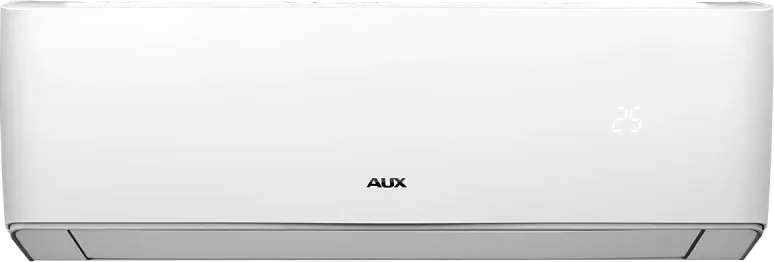
AUX
The AUX Halo 3.6 kW is a white, lightweight wall-mounted air conditioner with built-in Wi-Fi, a PM2.5 filter and an ioniser, meant for year-round use in a flat.
Price incl. installation
Price on request
The AUX Halo is a wall-mounted air conditioner that the manufacturer describes as a line for people who value minimalism and modern interiors. In the variant described here the nominal cooling capacity is 3.6 kW and the heating capacity 3.8 kW. The units are called AUX-12HA/I for the indoor and AUX-12HA/O for the outdoor. This is a model that does not try to impress with record numbers, but combines reasonable performance with a set of functions that look after the air and ease operation, among them built-in Wi-Fi with a weekly timer. The unit codes help you compare our offer with the manufacturer's documentation, and we give them so that you can check we are talking about the same appliance.
The seasonal parameters are more modest than at the top of the market, but honestly stated: SEER is 6.12, SCOP 4.14, and the energy classes are A++ in cooling and A+ in heating. The indoor unit measures 788 × 292 × 198 mm and weighs 8.5 kg, so it looks discreet on the wall. The indoor sound pressure level lies between 20 and 38 dB(A), and the outdoor unit reaches 56 dB(A). For this variant the manufacturer gives neither minimum and maximum capacity nor an outdoor temperature range beyond the lower limits, which is exactly why we stick to what has been published.
In practice the Halo is for someone who wants a healthy air conditioner that is simple to operate and does not stand out on the wall. The manufacturer emphasises an ioniser, a PM2.5 filter, an antibacterial filter and a filter of increased density. We quote the installed price after a free assessment. Below we discuss what follows from these promises for a Warsaw resident and where the limits of this model lie. For someone choosing an air conditioner for a flat it matters to understand what they are paying for and what they are not getting, so in the text we separate facts from marketing announcements.
In our catalogue the Halo is a premium model in terms of equipment, but not in terms of energy indicators. The manufacturer describes it as an exclusive line for lovers of luxury, and we translate that into practice: a white, compact casing, a rich set of health functions and Wi-Fi as standard. If, when choosing an air conditioner, you look mainly at the SEER figure, this model will not be the leader; if convenience and air filtration matter, it makes sense. Its strength is a clear set of features: an air conditioner built around filtration, night comfort and convenient control, not around one showy technology.
The 3.6 kW size suits a bedroom, a living room or a small study. At this nominal capacity the manufacturer gives neither a minimum nor a maximum value, so we do not describe the modulation range; instead we refer to what is known: inverter technology with a rotary compressor lets the unit adjust its work to the load. The difference compared with more advanced models is that here we are not looking for record seasonal results, but for a reasonable compromise.
It is a matter of expectations. The Halo is not meant for the toughest conditions and the largest rooms, but for a typical flat with a well-insulated bedroom or living room. It is worth knowing this limit before you buy, and at the free assessment we check whether your room's demand fits within 3.6 kW. If you live in a well-insulated block and need an air conditioner for one room, this kind of design is usually quite sufficient.
At the heart is an inverter rotary compressor, which the manufacturer presents as a guarantee of efficient, trouble-free operation and lower running costs. Nominal cooling capacity is 3.6 kW and heating capacity 3.8 kW. In this description we concentrate on what matters most for you, the seasonal results: SEER 6.12 and SCOP 4.14. Thanks to this, the unit does not work in jumps but gradually adapts its output to how much heat has to be removed from the room.
The energy classes are A++ in cooling and A+ in heating. The refrigerant is R32 with a GWP of 675; the manufacturer argues that it has low toxicity, can be recycled and requires 30% less refrigerant in the installation. The operating range in cooling starts at -10°C outdoor temperature and in heating at -20°C, with the upper limits not given. "Heating at -20°C" appears in the manufacturer's list of functions, so on frosty days the unit can supplement heating, but we do not treat it as the only source of warmth in winter. This design makes sense where the air conditioner runs for most of the year: as supplementary heating in spring and autumn, as cooling in summer.
The available modes are automatic, cooling, heating, dehumidifying, fan and Turbo. The dehumidifying mode automatically selects temperature and airflow to reduce humidity and prevent the growth of fungi, mould and bacteria. The economy mode and the 0.3 W standby mode limit energy use when the air conditioner is not working hard. Turbo mode speeds up reaching the set temperature, and automatic mode chooses between cooling and heating depending on conditions in the room.
This is the area the manufacturer puts first, under the slogan "air conditioning that looks after your health". The ioniser balances the number of positive and negative ions in the room, which according to the description is meant to prevent the growth of viruses, fungi and bacteria and to neutralise allergens and unpleasant odours. The PM2.5 filter catches fine particles of dust and, according to the manufacturer, removes 99.9% of these pollutants. For an allergy sufferer or someone living by a busy street this set makes real sense, although no filter replaces airing and regular cleaning.
It is complemented by an antibacterial filter with a bactericidal coating and a high-density filter that retains dust. The list of functions also includes 57°C sterilisation and mould protection, as well as hydrophilic aluminium vanes and gold-plated fins on the heat exchangers, which are elements of construction, not cleaning functions. The manufacturer marks UV sterilisation as version-dependent, so we do not promise it without checking the particular unit. It is worth remembering that the filters must be cleaned periodically, because a clogged filter reduces airflow and worsens comfort.
For the night there is a night mode: during the first two hours of cooling the unit raises the set temperature by 1°C per hour (in heating it lowers it at the same rate), keeps it constant for the following five hours and then switches off. The I FEEL function reads the temperature where the remote is, and the quiet mode lowers the sound pressure level of the indoor unit; according to the manufacturer's data it is from 20 to 38 dB(A).
Wi-Fi is built in as standard, together with a weekly timer. This way you do not need to buy a separate controller to set an operating schedule; the app has, according to the manufacturer, many functions, including a timer. From a phone, tablet or computer you can control the air conditioner at any time from anywhere. The convenience is that all settings, including schedules, are at hand on your phone, without leafing through the remote's instructions. A built-in module means you do not need to buy an adapter, which simplifies both the order and the installation, and you can set the weekly schedule right after the first start-up.
In daily use the wireless controller and the 24H timer will help. The Anti-Cold-Air function is meant to prevent cold air from blowing at the start of heating, and automatic restart restores settings after a power cut. Self-diagnosis signals problems, which shortens the time needed to find a fault during an inspection.
Note one thing: the manufacturer's data do not say how app control works in practice beyond the fact that the module is built in and has a weekly timer. That is why after installation we configure the connection together with you and check that the app sees the unit before we leave the flat. We will show this during the demonstration. If you do not use the app, all basic cooling and heating functions still work from the remote.
The manufacturer speaks of "timeless and stylish white". The indoor unit is white, measures 788 × 292 × 198 mm and weighs 8.5 kg, and its depth of 198 mm is among the small ones, so it does not project far from the wall. The low weight eases hanging, but we assess the wall's load-bearing capacity at the assessment, not by assumption. The white casing and small depth make the air conditioner blend into the wall, which helps in flats with light interiors.
The build includes a few details that matter in use. Two-sided condensate drainage lets you choose the more convenient side, and the moving louvres move in four directions (4D airflow), distributing air evenly around the room. The LED display shows the operating state. The outdoor unit has an anti-corrosion casing and gold-plated fins on the heat exchanger, which the manufacturer lists among features of construction and not as a cleaning function.
The outdoor unit reaches 56 dB(A), and it decides whether the air conditioner will be audible near a window. When choosing the place we take neighbours, bedrooms and service access into account. We do not promise things the data sheet does not confirm, and we discuss the size of the outdoor unit and the exact placement at the free assessment. Such details do not decide the choice, but they add up to the comfort of daily use.
Installing the AUX Halo covers hanging the indoor unit and placing the outdoor one, running up to several metres of refrigerant, electrical and condensate lines, and passing through the wall with a tidy arrangement of the installation. We then pull a vacuum, check the tightness of the system, charge it with refrigerant and start the air conditioner. We also explain what to do when a fault code or message appears on the display.
After start-up we check the operating parameters and configure the controls, including the built-in Wi-Fi. At the end we show you how to operate the unit and hand over the warranty documents. The maximum installation length is not given in this model's data, so we set the scope of work at the free assessment and not on assumptions. We also explain which documents you receive and how to use them if you have questions for service.
We discuss possible extra charges before the work: a longer route, drilling through concrete or reinforced concrete, chasing walls, a condensate pump and work from a lift platform. In servicing, what counts is regular washing of the filters and an annual inspection with a tightness check. The PM2.5 filter and the high-density filter collect dust, so in the season it is worth checking them more often than once every few months. Regular inspection is the cheapest way to keep performance, because a neglected filter or heat exchanger gradually worsens both comfort and efficiency.
The AUX Halo 3.6 kW is for people who look for an air conditioner with an emphasis on air filtration and convenient operation, not on record seasonal figures. It will suit a bedroom or living room, where quiet operation from 20 dB(A), a white, discreet shape and Wi-Fi without buying extra modules matter. It also suits those who want to programme operation across the week without separate controllers. It works well in a flat where a light indoor unit weighing 8.5 kg is an advantage.
Consider another model if the lowest possible energy use is most important: SEER 6.12 and class A++ are decent, but not the highest. Think again too if you need capacity much larger than 3.6 kW, or if you care about modulation ranges and maximum installation length, which the data sheet does not give. If you are not sure whether this capacity will be enough, tell us the room size and its sun exposure, and we will advise whether a larger model is worth considering.
We will assess this best on site: we measure the room, check the wall and the spot for the outdoor unit. We quote the installed price after a free assessment, and we discuss possible extra charges before the work begins. This way the decision rests on measurement and not on guesses.
Technical data
| Model (indoor / outdoor unit) | AUX-12HA/I / AUX-12HA/O |
|---|---|
| Cooling capacity (nom.) | 3.6 kW |
| Heating capacity (nom.) | 3.8 kW |
| SEER (cooling) | 6.1 — class A++ |
| SCOP (heating) | 4.1 — class A+ |
| Refrigerant | R32 |
| Noise level (indoor, min.–max.) | 20–38 dB(A) |
| Noise level (outdoor) | 56 dB(A) |
| Indoor unit dimensions (W/D/H) | 788/198/292 mm |
| Indoor unit weight | 8.5 kg |
| Operating range (cooling, outdoor) | -10°C to null°C |
| Operating range (heating, outdoor) | -20°C to null°C |
Questions
The manufacturer lists a function for heating at -20°C, and the lower limit of the heating operating range is -20°C. Heating capacity is 3.8 kW and the energy class in heating is A+. We do not treat this model as the only source of warmth in the hardest frosts.
The indoor unit's sound pressure level lies between 20 and 38 dB(A). The outdoor unit reaches 56 dB(A), so when choosing the installation spot we take neighbours' windows and bedrooms into account.
Yes, the manufacturer states that Halo series air conditioners have a Wi-Fi module built in as standard, with a weekly timer. We configure it together with you after installation.
The indoor unit is 788 mm wide, 292 mm high and 198 mm deep, and weighs 8.5 kg. The maximum installation length is not given in the model data, so we set the scope of work at the free assessment.