 LeoKlima
Toshiba
HAORI
- 3.5 kW
- Wi-Fi
- Heating function
from 9,321 zł · incl. installation
View details →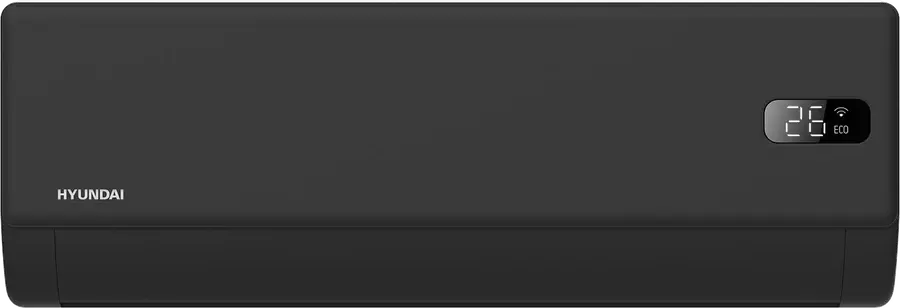
Hyundai
Hyundai Galaxy is a 3.5 kW wall-mounted air conditioner in a matt black casing, with heating down to -22°C, extra filters and operation from 20 dB.
Price incl. installation
Price on request
Hyundai Galaxy stands out from most air conditioners by one immediately visible detail: the indoor unit has a matt black casing. The manufacturer describes it as a decorative element for demanding interiors. Underneath runs an inverter system with a nominal cooling capacity of 3.5 kW and a nominal heating capacity of 3.8 kW, using R32 refrigerant. The set consists of the units HRP-M12GXI and HRP-M12GXO. For someone who wants the air conditioner to be part of the decor rather than something to hide, it is a rare proposition among units of this output.
The technical data form a coherent picture of a year-round unit. The operating range in cooling is from -15°C to 50°C, and in heating from -22°C to 24°C. The maximum installation length reaches 25 m. The indoor unit runs at a sound pressure level of 20 to 39 dB, while the outdoor unit goes up to 56 dB. The energy classes are A++ for cooling (SEER 6.5) and A++ for heating (SCOP 4.1).
On top of that comes a set of filters: a silver-ion filter, a catalytic filter, an activated-carbon filter and main high-density filters, plus a plasma generator for ionising the air. Control is by remote or, once a Wi-Fi module is connected, through the NetHome PLUS app. We quote the installed price after a free assessment, and below we describe what this data means in practice for a flat in Warsaw.
Galaxy is hard to mistake for other models: the black, matt body of the indoor unit is meant to catch the eye, not hide on the wall. The manufacturer, Hyundai, writes outright about a prestigious look and distinctive aesthetics. We will add only what the data supports: the colour is black, the finish is matt, and the quality of the paint can only be judged by seeing the unit in person. If the air conditioner will hang in a living room above the sofa, that visual decision matters as much as the numbers in the table, so it is worth making it deliberately, before the equipment is ordered.
In terms of output it is a classic variant for a room or a small flat: 3.5 kW cooling and 3.8 kW heating. The modulated cooling capacity lies between 1.1 kW and 3.8 kW, which lets the compressor work closer to the room's needs than in simpler units without speed control. Three features matter here together: elegant black, a full list of filters and the declared winter operation down to -22°C.
The indoor unit can work in a mono-split arrangement, meaning one indoor and one outdoor unit, but the manufacturer also states compatibility with multi-split configurations. For a customer who is fitting one air conditioner today and may consider another room in a few years, that is an extra argument. We discuss the details of such an extension only when you are actually planning it.
The most interesting part of this design is operation at low temperatures. The outdoor temperature range in heating is from -22°C to 24°C, and the manufacturer pairs it with the Arctic KIT heater set. Heaters for the drip tray and the compressor are meant to allow stable operation even at -22°C. In Warsaw such frosts are rare, but the margin gives peace of mind during a hard winter. In cooling the unit works from -15°C to 50°C, which is the whole range encountered in the Polish climate. The heaters operate only when needed, and their presence does not change daily use: you set the temperature and mode, and the automation does the rest.
Efficiency is described by two A++ classes: SEER 6.5 for cooling and SCOP 4.1 for heating. Nominal heating capacity is 3.8 kW, and the modulation range starts at 1.1 kW. Both A++ values come from the manufacturer's catalogue sheet and refer to this capacity variant. R32 is the same refrigerant widely used in new domestic air conditioners, so servicing requires nothing unusual. SEER is 6.5 and SCOP 4.1, and expectations about energy use are best built on those numbers, not on the name of the class alone.
The +8°C hold mode makes sure an unused room does not drop below that temperature in winter. The system manages this automatically. We recommend treating it as protection against chilling, not as a way of regularly heating an empty flat, because the cost of energy during a long absence still has to be worked out. For more serious decisions about heating with an air conditioner, we help calculate the demand at the free assessment.
Noise is the second strong point. The manufacturer gives the indoor unit's sound pressure level as 20 to 39 dB, and the Quiet function lowers operation to as little as 20 dB. It describes this as suitable for a bedroom or a child's room. Quiet operation comes from DC fan motors and improved sound insulation of the indoor unit. The outdoor unit goes up to 56 dB, so we do not place it under a neighbour's bedroom window or under your own.
Filtration is extensive. The main high-density filters have anti-mould and anti-fungal action and are said to reach PM2.5 filtration. In addition there are three filters: silver ion (which the manufacturer describes as limiting the growth of bacteria and fungi), catalytic (neutralising odours and microorganisms) and activated carbon, for which the manufacturer claims 99% effectiveness in removing unpleasant smells. These are the manufacturer's claims, not our measurements.
The catalytic filter has one required chore: the manufacturer recommends putting it in the sun for 6 to 8 hours every 3 to 4 months. It is a small thing, but worth remembering when planning the season. The plasma generator releases negative ions, which according to the manufacturer remove odours, dust, smoke and fine particles from the air and reduce static electricity. None of the filters removes the need to clean the basic mesh screens regularly. With such extensive filtration it makes sense to agree at home who looks into the indoor unit and when, because even the best filters work well only when they are not clogged. If someone in the household has allergies, they should talk to a doctor about what to expect from filtration; an air conditioner supplements ventilation and cleaning, it does not replace them.
The manufacturer describes remote Wi-Fi control as standard, but words it as the possibility of connecting a Wi-Fi module. That is why we do not write that the module is physically included in the set; we confirm it when quoting so there are no surprises at handover. Control is through the NetHome PLUS app, available for Android and iOS phones.
Through the app you can remotely adjust the temperature, switch the unit on and off, change operating modes and set a weekly schedule. For a flat in Warsaw the most practical use is often switching on cooling or heating some tens of minutes before you come home from work. The air conditioner can also be operated with the remote, so a lack of network or a household member's dislike of apps does not block use of the unit. The app is a convenient addition for people who return at varying hours.
At commissioning we configure the controls and show you how to choose the Quiet mode, set +8°C and plan the weekly schedule. Anyone who uses the air conditioner daily soon appreciates the schedule, because the unit does not run when nobody is home. As for the network connection, it is best to ensure a stable Wi-Fi signal at the place where the indoor unit will hang, because weak signal is the most common cause of trouble with the app. It is worth checking this at home with a phone before the assessment and telling the installer the result so that they can suggest a better spot on the wall.
The indoor unit is 813 mm wide, 289 mm high and 201 mm deep, and weighs 7.4 kg. It is a relatively light construction, which makes it easier to hang on a typical plasterboard or brick wall. Matt black emphasises the form, so it looks good on a light wall or in contrast with wood, but in a small, dark room it may feel heavy.
The manufacturer calls the unit a universal decorative element. We recommend judging it in person, or from photos, in the context of your own interior: a black surface can collect dust and streaks, especially in a room with air movement. We clean it with a soft, dry or slightly damp cloth after switching the unit off, without abrasive agents.
The indoor unit's construction is closely tied to the features described above: dense filters, the silver-ion filter, the catalytic filter and the activated-carbon filter all need access for cleaning. It is worth showing the household straight away how to open the panel and take out the screens; during the instruction we do it together with you. On dark walls the black of the unit can almost disappear into the background, which some customers regard as an advantage and others as a drawback, so think about whether you want contrast or a subtle blend. The manufacturer's description does not mention any other finishes, which is why the matt black version is the only one we write about.
We quote the installed price after a free assessment. Installation covers: the indoor and outdoor units, up to a few metres of refrigerant, electrical and condensate run, passing through the wall with tidy routing of the installation, vacuuming and a leak check of the system. We then charge the system with refrigerant, commission the unit, check the operating parameters, configure the controls, give instruction on use and hand over the warranty documents.
The manufacturer allows an installation length of up to 25 m, which leaves a generous margin for flats where the outdoor unit has to stand far from the room. The standard installation scope covers only a few metres of run, so a longer section is a surcharge. Other possible surcharges, discussed before work, are drilling through concrete or reinforced concrete, wall chasing, a condensate pump and work from a lift platform. We set the scope at the free assessment.
Operation involves cleaning the filters and an annual service check, which includes checking tightness and condensate drainage. With this model we also remember the catalytic filter, which needs periodic exposure to the sun. The model numbers (HRP-M12GXI and HRP-M12GXO) are worth keeping at hand when reporting a service request. For winter use we pay attention to condensate drainage from the outdoor unit, because it most often causes trouble. After installation we check that condensate flows freely, that the outdoor unit stands firmly and that the modes we demonstrated respond as expected. Only then do we finish the visit.
Galaxy is for someone who wants an air conditioner that is visible in the room and does not intend to hide it: the black matt unit is an aesthetic choice and at the same time a model with concrete technical strengths. Heating down to -22°C, operation from 20 dB and installation up to 25 m mean that many unusual flats can be handled here without compromise.
It will be less obvious for someone choosing the cheapest equipment, because the rich set of filters and heaters means extra elements to look after. The colour will not suit everyone either: black shows dust and slight dirt. If a white casing matters to you, it is better to ask about other models straight away. It is also worth remembering that the claims about filters, ionisation and 99% effectiveness come from the manufacturer and were not measured by us in a specific flat.
If Galaxy sounds like the right direction, book a free assessment with LeoKlima. We will check the place for both units, the pipe route, possible surcharges and the Wi-Fi setup. We quote the installed price after a free assessment, and you will decide on the colour and scope only after seeing a concrete proposal for your flat.
Technical data
| Model (indoor / outdoor unit) | HRP-M12GXI / HRP-M12GXO |
|---|---|
| Cooling capacity (nom.) | 3.5 kW (range 1.1–3.8 kW) |
| Heating capacity (nom.) | 3.8 kW (range 1.1–4.0 kW) |
| SEER (cooling) | 6.5 — class A++ |
| SCOP (heating) | 4.1 — class A++ |
| Refrigerant | R32 |
| Noise level (indoor, min.–max.) | 20–39 dB(A) |
| Noise level (outdoor) | 56 dB(A) |
| Indoor unit dimensions (W/D/H) | 813/201/289 mm |
| Indoor unit weight | 7.4 kg |
| Operating range (cooling, outdoor) | -15°C to +50°C |
| Operating range (heating, outdoor) | -22°C to +24°C |
| Max. pipe length | 25 m |
Questions
The heating operating range is -22°C to 24°C, and the manufacturer cites the Arctic KIT heater set for stable operation at low temperatures down to -22°C. Nominal heating capacity is 3.8 kW, class A++ (SCOP 4.1).
The indoor unit runs at a sound pressure level of 20 to 39 dB, and the Quiet mode lowers it to as little as 20 dB. The outdoor unit goes up to 56 dB.
The manufacturer describes remote control as standard in the form of the ability to connect a Wi-Fi module and control the unit through the NetHome PLUS app on Android and iOS. Whether the module is in the set we confirm when quoting.
The maximum installation length is 25 m. A standard installation covers up to a few metres of run, and a longer section needs a surcharge, which we discuss at the free assessment.
Similar models

