 LeoKlima
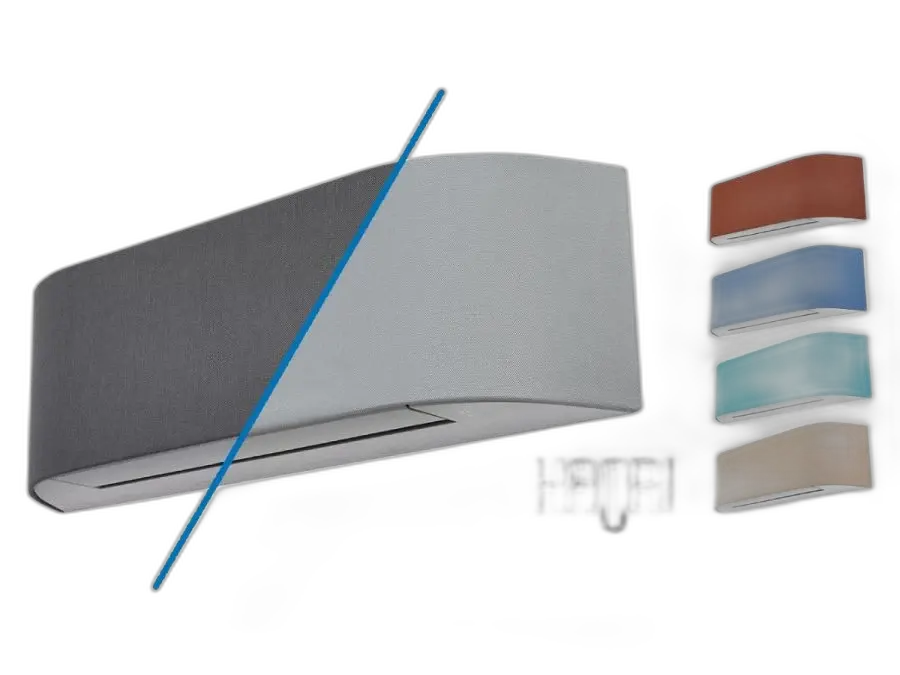
Toshiba
HAORI
- 3.5 kW
- Wi-Fi
- Heating function
from 9,321 zł · incl. installation
View details →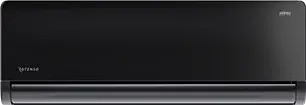
Rotenso
Rotenso Versu Mirror 3.5 kW is a wall-mounted air conditioner with a dark mirror front that the manufacturer rates for heating at outdoor temperatures down to -25°C.
Price incl. installation
Price on request
What sets Versu Mirror apart in the Rotenso range is, first of all, its looks. The indoor unit has a dark graphite, faintly iridescent casing, and the whole front is covered by a pane of dark mirror. When it is switched off, it reads more like a dark glass panel than a typical white air conditioner. It is a model for people who do not want the thing on the wall to announce itself as technical equipment the moment they walk into the room.
Behind the appearance there are numbers worth knowing before you buy. The 3.5 kW variant is rated by the manufacturer at 3.5 kW nominal cooling and 3.8 kW nominal heating, with seasonal figures of SEER 8.5 (class A+++) and SCOP 4.6 (class A++). In heating mode it works with outdoor air down to -25°C, while cooling runs from -15°C to 50°C. The refrigerant is R32.
Who is it for? Most often owners of flats in new buildings, apartments with large windows, offices and small commercial premises, and interiors done in dark, modern colours. In such rooms a mirror front sits comfortably next to metal, glass and graphite furniture. Below we describe it the way we would in a conversation with a customer in Warsaw: first the room and how it is used, then the technical data, and finally the installation. It helps to read it in that order, because it is the room, not the parameter table, that most often decides whether a mirror front is a good choice or just a striking decoration. We quote the installed price after a free assessment.
In the LeoKlima catalogue, Mirror is the model for people who start choosing an air conditioner by asking how it will look on the wall. Rotenso describes it as a unit with a luxury front panel, and indeed almost the whole difference from plainer models of the same capacity sits in the front and the finish of the casing. Operating figures in the 3.5 kW variant match several other Versu versions: the same capacity, the same seasonal ratings, the same noise range. What makes Mirror different is the look and the heating temperature range. Anyone comparing quotes should compare along exactly that line: what do you get for the extra money over a version with a glass front, and what you do not get, because the motor, compressor and filters are similar.
For a flat, 3.5 kW falls into the usual range for a single living room, bedroom or study. The exact choice depends on room volume, sun exposure, the number of windows, ceiling height and whether the space opens onto a kitchen or hall, because then cool or warm air escapes further than floor area alone would suggest. A mirror front does not change those rules, so during the free assessment we check the wall, the pipe route and the spot for the outdoor unit, and only then confirm the model makes sense.
The model also has a practical niche. If the room already has many reflective surfaces, such as glass, brushed steel, lacquered cabinet fronts or a large hallway mirror, the dark pane does not clash with them. In a light Scandinavian interior, on the other hand, a dark rectangle becomes a strong accent, so we will not recommend it to everyone.
The compressor uses Digital DC Inverter technology, so output is adjusted smoothly to demand instead of the unit switching on and off. The manufacturer gives a cooling range from 1.3 kW to 4.3 kW and a heating range from 0.9 kW to 4.4 kW. The low minimum means that once the set temperature is reached, the unit can idle at very low output, which helps hold a steady temperature and keeps noise down.
The most important figure for this model is the heating limit: according to the manufacturer it heats the room with outdoor air as cold as -25°C. This is backed by a built-in winter package consisting of a drain-pan heater and a compressor crankcase heater. The first is meant to melt snow and ice that collects in the outdoor unit, the second prepares the compressor for work in frost. In Warsaw, where winters seldom get that cold, it is a safety margin rather than an everyday condition, but during a freezing week it matters if the air conditioner is meant to be a supplementary heat source.
The SCOP of 4.6 (class A++) describes efficiency over the heating season, and SEER 8.5 (class A+++) over the cooling season. Cooling is available at outdoor temperatures from -15°C to 50°C. The outdoor unit is declared at 53 dB(A), so when choosing a place on a balcony or facade you need to think about neighbours, about sound bouncing off walls, and about the fact that a niche closed on three sides amplifies noise more than an open facade. It is a detail that is easy to settle at the assessment stage and hard to fix after installation.
The indoor unit's noise sits, according to the manufacturer, between 19 dB and 40 dB. The lower figure refers to the super-quiet eMOTO mode, in which the fan turns slowest, so this unit can be left running in a bedroom overnight. Close to 40 dB you will clearly hear the airflow, which is normal for any wall-mounted unit. In daytime, when everyday sounds fill the flat anyway, the gap between those levels is usually not bothersome, whereas at night it is better to stay on the quietest setting.
Airflow is handled by a rotating horizontal louvre that can aim the stream high toward the ceiling or low toward the floor. The 4D automatic louvres are controlled with the remote or a wall controller, and the unit remembers the last louvre position after being switched on again. In heating mode the eMOTO system starts the refrigeration circuit first so that cold air is not blown out. A turbo mode is available for reaching the set temperature faster, along with an Eco mode.
Air passes through an HD iAIR pre-filter and an antibacterial filter, and the manufacturer also lists the iAIR ionizer, which produces negative oxygen ions. The iClean function cools and then warms the indoor heat exchanger in a controlled way to limit bacteria and fungi; it is not available in a Multi Split system. None of these features replaces regular filter cleaning, which we recommend every few weeks in the heavy-use season, and more often in a flat with a dog, a cat or a busy street outside. A dirty filter restricts airflow and worsens both cooling and acoustic comfort.
The basic way to operate it is the wireless remote. From it you set the mode, temperature, fan speed, louvre position, timer and sleep mode. The sleep function gradually adjusts the temperature during the night so that you are not woken by air that is too cold or too warm. After a brief power cut, the auto-restart memory brings back the previous settings.
The manufacturer describes a SMART Wi-Fi function that lets you control the air conditioner from a smartphone or tablet, including away from home. It is described together with a Wi-Fi modem, so control through the app is possible, but we do not assume the module is always included in the set; we settle that when quoting. The manufacturer also lists an air humidity sensor, accessible from the mobile app, which does not work in a Multi Split system.
A wired controller is available as an option. SMART Follow mode uses an extra temperature sensor in the remote or controller, so the unit responds to the temperature where you are sitting, not only next to the unit under the ceiling. Silent mode switches off beeps and light signals, which people who sleep in the same room will appreciate. There is also a self-diagnosis function that shows an error code on the display. That makes contact with a service technician simpler, since instead of describing symptoms you read out the message and we know where to start.
The indoor unit measures 920 mm wide, 211 mm deep and 321 mm high and weighs 11.3 kg. It is therefore fairly wide but shallow, so above a sofa or bed it does not protrude far into the room. The width of nearly a metre needs to be considered when picking the spot: you need clearance from the ceiling and side walls, plus free space in front of the air outlet.
The front is a pane of dark mirror. In practice this means the surface reflects light from windows and lamps, so it looks different in the morning than in the evening under artificial light. Dust and fingerprints show more clearly on this front than on matt plastic. We wipe it with a soft, slightly damp cloth with the unit switched off, using no abrasive products and never spraying liquid directly onto the casing. Before ordering, we suggest looking at the wall at different times of day and considering whether the dark pane would reflect the opposite window in a way that bothers you while watching television.
The manufacturer uses anti-corrosion gold-coated fins in both the indoor and outdoor unit. That is a heat exchanger coating protecting against corrosion, not a self-cleaning function of the appliance. The condensate can be led out to the left or the right side of the indoor unit, which makes it easier to adapt to the wall layout. Looks matter here as much as performance, but should not be the only selection criterion.
The installation scope covers fitting the indoor and outdoor units and running up to a few metres of refrigerant, electrical and condensate routes. We make the wall pass-through and lay the installation neatly, then pull a vacuum and check the system for leaks. After charging with refrigerant we start the unit, check operating parameters, configure the controls, show you how to use it and hand over the warranty documents.
The manufacturer states a maximum installation length of 25 m. If the route is longer than standard, a surcharge may apply, as it may for drilling through concrete or reinforced concrete, chasing walls, a condensate pump or work from a lift. We discuss all such items before work begins, and the scope is agreed at the free assessment. We quote the installed price after a free assessment.
With a mirror front it is worth planning one more thing: space for easy access during servicing. Users normally remove and clean filters themselves, while a check of the refrigeration circuit and heat exchanger should go to a specialist, usually once a year. Regular inspection keeps efficiency up and reduces the risk of odours and damp inside the unit. It is also good to check once a season that the condensate outlet is clear and that the outdoor unit is not covered by leaves, snow or climbing plants, which are the most common, mundane causes of lost performance.
We would pick Versu Mirror 3.5 kW for a customer with one main room to cool, a darker or modern decor, and a wish for the unit to be part of the interior. An added argument is the heating range down to -25°C if the air conditioner is meant to help in colder months, plus the lowest indoor noise level of 19 dB in a bedroom.
It suits less well people who dislike wiping marks from a glossy surface, light interiors where a dark pane would be too stark, and cases where the only thing that counts is the lowest cost. In that situation a plainer Versu variant may be the more sensible option. Everything depends on the room, which is why we arrange a free assessment where we look at the wall and judge how the front will reflect light at different times of day.
Please remember that the technical data refers to the 3.5 kW variant according to the manufacturer. We quote the installed price after a free assessment, and if you would rather compare a few models, we can set them side by side for your flat on a single sheet.
Technical data
| Cooling capacity (nom.) | 3.5 kW (range 1.3–4.3 kW) |
|---|---|
| Heating capacity (nom.) | 3.8 kW (range 0.9–4.4 kW) |
| SEER (cooling) | 8.5 — class A+++ |
| SCOP (heating) | 4.6 — class A++ |
| Refrigerant | R32 |
| Noise level (indoor, min.–max.) | 19–40 dB(A) |
| Noise level (outdoor) | 53 dB(A) |
| Indoor unit dimensions (W/D/H) | 920/211/321 mm |
| Indoor unit weight | 11.3 kg |
| Operating range (cooling, outdoor) | -15°C to +50°C |
| Operating range (heating, outdoor) | -25°C to +30°C |
| Max. pipe length | 25 m |
| Version (manufacturer revision) | R16 |
Questions
The dark pane shows dust and fingerprints more clearly than a matt casing, but a soft, slightly damp cloth on a switched-off unit is enough. We do not use abrasive products.
The manufacturer declares heating at outdoor temperatures down to -25°C and cooling from -15°C to 50°C. The Cloth Stone version has a lower heating limit.
Indoor noise is from 19 dB to 40 dB, and the quietest level belongs to the super-quiet eMOTO mode. The outdoor unit is 53 dB(A), so we place it away from the bedroom window.
The indoor unit is 920 mm wide, 211 mm deep and 321 mm high, and weighs 11.3 kg. The manufacturer's maximum installation length is 25 m; the scope is agreed at the free assessment.
Similar models

