LeoKlima
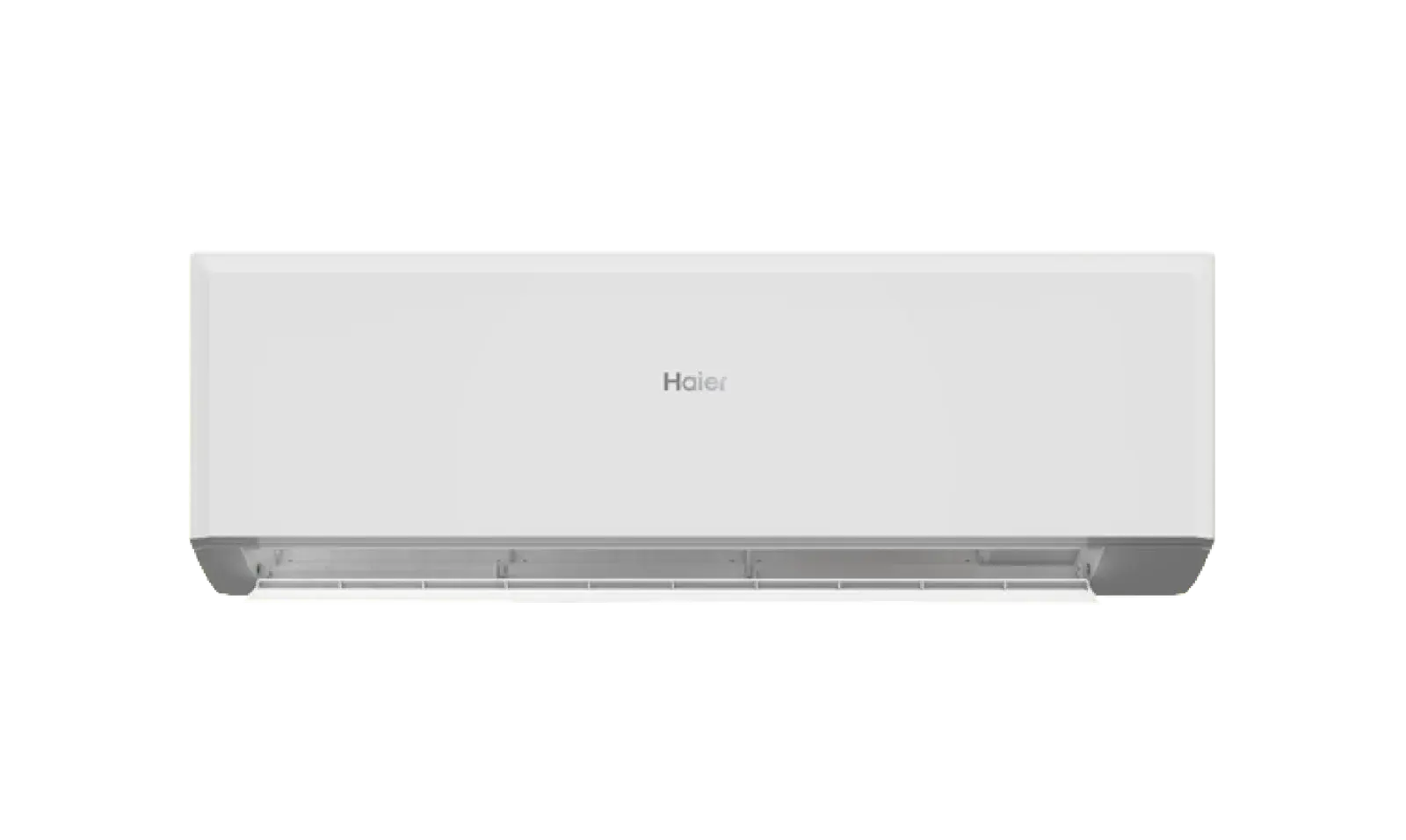
Haier
Revive Plus
- 3.5 kW
- Wi-Fi
- White
from 4,353 zł · incl. installation
View details →
Xiaomi
The Xiaomi Mijia Eco 3.7 kW is a white wall-mounted split air conditioner, run from a remote or the Xiaomi Home app, with auto-cleaning and a voltage stabiliser, recommended for rooms of 15–25 m².
Price incl. installation
Price on request
The Xiaomi Mijia Eco is a wall-mounted split air conditioner that the manufacturer sells under the trade name "3.5 kW", even though its technical table lists 3.7 kW of nominal cooling output and exactly the same figure for heating. On this page we stick to the number in the table, because that is what decides whether the unit suits a given room. Xiaomi recommends this model for rooms of 15–25 m². In a Warsaw flat that usually means a bedroom, a home office or a smaller living room. For rooms with strong direct sun, very high ceilings or a light construction, the manufacturer itself advises choosing more power.
Cooling efficiency is described by SEER 6.3, which corresponds to class A++ on the EU scale. For heating, Xiaomi's Polish product page gives no SCOP figure, so we do not assess seasonal efficiency in winter and we do not assign an energy class to that mode. Minimum and maximum output are also missing, which means there is no information on how far the compressor modulates. What we do know is that it is a full DC inverter system running on R32 refrigerant, and that the manufacturer's feature copy claims heating at -20°C and cooling at 60°C outdoors. The indoor unit measures 795 x 205 x 295 mm and weighs 8.9 kg.
Where this model has the most to say is everyday convenience. The Xiaomi Home app lets you switch the unit on remotely, build a cloud schedule, set your own sleep curves and watch energy use. On top of that come auto-cleaning, a reminder when the filter is dirty, protection against water dripping from the air outlet, and a stabiliser that, according to the manufacturer, keeps the unit running at supply voltages from 165 to 265 V. It suits someone who wants to control air conditioning from a phone and enjoys automations, and who cares less about full documentation of heating efficiency.
Mijia Eco is a wall-mounted series in which Xiaomi puts the emphasis on phone control, automations and small conveniences in daily use. The version described here carries "3.5 kW" in its name, but the manufacturer's technical data state 3.7 kW for both cooling and heating. That difference matters when sizing the unit, because 3.7 kW is a nominal value rather than a peak one, and that is how we compare it with other units in our catalogue. The Polish product page does not give the model codes of the indoor and outdoor units, so we do not quote them in this description.
The recommended room size is 15–25 m². The manufacturer notes that this applies to a typical room in a standard home, and that with direct sunlight, very high ceilings or a simple steel structure the installed power should be increased accordingly. In Warsaw this applies, for example, to top-floor flats right under a flat roof or to rooms with large south- and west-facing windows that heat up well before noon in summer. During the free assessment we look at these factors and tell you plainly whether one unit is enough or another solution makes more sense.
It is also fair to point out what is missing from this model's documentation. There is no SCOP, no minimum or maximum output, no table of outdoor temperature ranges and no maximum pipe length between the units. That does not mean the unit performs badly, but it cannot be compared reliably on these points with air conditioners for which such data are published. If heating is meant to be an important source of warmth in your flat, let us talk about it before you order, not after the installation.
At the core of the design is a full DC inverter system. The manufacturer stresses that, compared with conventional units, this brings higher efficiency, steadier operation and a longer service life. In cooling the seasonal efficiency is SEER 6.3, which falls into class A++ on the EU scale. In heating we only know the nominal output of 3.7 kW. Without a SCOP value we do not state an energy class for this mode, because we have no figure to back it up, and we do not want to repeat a label that the data do not support.
Xiaomi claims operation across a wide temperature range: cooling at 60°C and heating at -20°C outside. These figures come from the descriptive material, not from the specification table, and they do not say how much heating output the unit delivers in such frost. For a flat in Warsaw, where winter rarely goes that low, we treat them as a statement about the operating limit rather than a promise of full comfort in a hard freeze. It is sensible to assume that the air conditioner tops up the room temperature while the main heating stays as it is.
An interesting element is the quick start. According to tests the manufacturer refers to, the outlet air temperature drops below 22°C within 30 seconds of cooling and rises above 36°C within a minute of heating, under defined starting conditions. This is helped by a 108 mm cross-flow fan and a Turbo mode. The Mijia AI energy-saving mode uses cloud computing to cut power use without giving up cooling performance. The actual effect, however, depends on the size of the room, the building's insulation and the habits of the people living there.
In everyday use hygiene makes a real difference. Auto-cleaning runs through several stages: condensing water, rapid frosting, then defrosting and rinsing away the dirt. You start it from the Xiaomi Home app or from the remote. The filter has anti-mould and antibacterial properties and comes out after pressing the "Open" button, so cleaning it needs no tools. The unit tells you on its own when the filter is dirty or clogged. This does not replace a periodic service, but it makes basic care between service visits much easier to keep up with.
A second group of features concerns sleep and humidity. Sleep mode adjusts the temperature and fan speed, while a personalised version of that mode and sleep curves can be set to match your own habits. A built-in light sensor adjusts the display brightness automatically, which matters in a bedroom. Dry mode lowers indoor humidity, and the smart anti-condensation function corrects temperature and humidity on its own based on weather data so that water does not drip from the air outlet. That last function switches on automatically, without any input from the user.
Noise is a subject where we stay cautious. The manufacturer's table gives the indoor unit values from 19 to 41 dB(A), depending on fan speed, and 53 dB(A) for the outdoor unit, but it does not say whether these are sound pressure or sound power figures. For that reason we do not compare them with other models and we do not promise particularly quiet operation. If undisturbed sleep is your priority, during the quote we will choose the mounting position with you and show you how to set the night mode.
The Mijia Eco is operated with a remote or through the Xiaomi Home app, and the manufacturer points out that some features require the app, such as the filter reminder and the light sensor. From your phone you can switch the unit on and off remotely, change settings, check the room temperature, plan operation with a cloud schedule and configure sleep curves. The unit's software receives OTA updates, which according to the manufacturer extend the available usage scenarios. The app also shows current energy use and suggests ways to reduce it.
An important technical detail: the air conditioner connects only to a 2.4 GHz Wi-Fi network and does not work with the 5 GHz band. In many flats the router broadcasts both bands under one network name, which often causes trouble during pairing. At commissioning we help connect the unit to your home network and check whether the signal reaches the spot where the indoor unit hangs. If the router sits at the other end of the flat behind several walls, it is better to know that before installation day.
Voice control works through devices with Google Assistant, which are sold separately. The manufacturer notes that the assistant is not available in every language and country, so we treat this as an extra rather than the main way to use the unit. The air conditioner can also be added to Xiaomi Home AIoT automations together with other compatible devices from the brand. The feature list further includes a timer, sleep and dry modes, and automatic restart, which restores the previous operating mode after a power cut.
The indoor unit is white, with a smooth, rounded body and buttons placed so that operation feels intuitive. It measures 795 x 205 x 295 mm (width, depth, height) and weighs 8.9 kg. That size fits comfortably above a bed, over a door or in the corner of a room without dominating the interior. White is easy to match with light walls, white window frames and most contemporary interiors, so you do not have to plan the room around the unit.
Behind the simple form there are a few technical solutions. The voltage stabiliser, which the manufacturer calls STABILIZER, is described as keeping the unit working through supply fluctuations in the 165–265 V range and protecting key components from damage. In older blocks of flats with ageing wiring this is a practical safeguard. It does not, however, replace a sound electrical installation and a properly rated circuit breaker, which we check when we inspect the flat before installation.
The unit runs on R32 refrigerant. The large 108 mm fan needs a free air outlet, so we avoid mounting it right under the ceiling, behind curtains or in a recess where the airflow would bounce off an obstacle. The Polish product page does not state the maximum pipe length between the units, so we plan the route individually and check the requirements in the installation manual supplied with the unit before we drill through the wall.
We begin with a free assessment, where we agree the positions of both units and the scope of work. The standard scope covers mounting the indoor and outdoor units, running up to a few metres of refrigerant, electrical and condensate lines, making the passage through the wall and routing the installation neatly. We then pull a vacuum and check the system for leaks, charge it with refrigerant and start the unit.
Finally we check the operating parameters and configure the controls; with this model that usually also means connecting it to the Xiaomi Home app on the 2.4 GHz network. We walk you through operation, show you how to run auto-cleaning and remove the filter, and then hand over the warranty documents. Any surcharges are discussed before work starts. They may apply to a longer line set, drilling through concrete or reinforced concrete, chasing walls, a condensate pump or work from a lift platform.
After installation, regularity is what counts. The filter takes a few minutes to clean, and the reminder in the app helps you not to forget it. Once a year it is worth booking a service that covers a leak check, the condensate drain and the condition of the heat exchangers. Auto-cleaning supports hygiene but does not replace a thorough clean by a technician. We quote the installed price after a free assessment.
The Mijia Eco 3.7 kW suits someone who runs their home around an app and likes control from a phone: schedules, sleep curves, energy monitoring and automations with other Xiaomi devices. It works well in a room of 15–25 m² where the main job is summer cooling and heating plays a supporting role, for example in spring and autumn before the district heating comes on. It is also useful where the supply voltage tends to be unstable.
It is a less obvious choice for someone who wants to base the heating of a flat on an air conditioner and compares units by SCOP. The manufacturer does not publish that figure, nor the output modulation range. We also advise people who are particularly sensitive to sound to hold off on judging the noise level until we know the installation conditions, because the noise data do not say clearly which quantity they describe.
In short: a compact white wall unit with a nominal output of 3.7 kW, SEER 6.3, auto-cleaning, a voltage stabiliser and extensive control through Xiaomi Home. If that set of features matches what you need, book a free quote. We will look at the room, check the Wi-Fi coverage and propose positions for both units.
Technical data
| Cooling capacity (nom.) | 3.7 kW |
|---|---|
| Heating capacity (nom.) | 3.7 kW |
| SEER (cooling) | 6.3 — class A++ |
| Refrigerant | R32 |
| Noise level (indoor, min.–max.) | 19–41 dB(A) |
| Noise level (outdoor) | 53 dB(A) |
| Indoor unit dimensions (W/D/H) | 795/205/295 mm |
| Indoor unit weight | 8.9 kg |
Questions
Yes. It has a heating mode with a nominal output of 3.7 kW, and the manufacturer claims operation at -20°C outdoors. It does not publish a SCOP or the heating output at low temperatures, so we treat this model as top-up heating in the shoulder seasons rather than the only heat source in a flat.
The manufacturer's table gives 19 to 41 dB(A) for the indoor unit, depending on fan speed, and 53 dB(A) for the outdoor unit, but it does not specify whether these are sound pressure or sound power values. For that reason we do not compare them with other models. During the quote we will advise on the mounting position and sleep mode settings.
The unit works only with a 2.4 GHz Wi-Fi network and does not support the 5 GHz band. Phone control requires the Xiaomi Home app. At commissioning we help connect the unit to your network and check the signal at the mounting spot.
The indoor unit measures 795 x 205 x 295 mm (width, depth, height) and weighs 8.9 kg. The manufacturer does not state a maximum pipe length, so we agree the route between the units during the free assessment.